Will Eisner the Spirit Will Eisner the Spirit Art 1979
Today, March 6th, would be Will Eisner's 100th altogether. The comic book fable is perhaps best known to fans today as the namesake for the prestigious almanac comic volume awards, the Eisners, his popularization of the term "graphic novel," and his superhero creation, The Spirit. Eisner was one of the earliest "star" artists in the Gilt Age of comic books, as he and his partner Jerry Iger had a business organisation where they would "package" comic book fabric for comic volume companies to purchase. Eisner and Iger split, though, when Eisner came up with the idea for The Spirit, which involved a brilliant new approach in comics.
RELATED: Late Bloomers: 15 Superhero Traits That Developed Later
Eisner's thought for "The Spirit" was as a seven-page comic book included equally a supplement in newspapers effectually the United States as an addition to their Sunday "funny pages." Other Eisner-created characters would be included in the supplement, but "The Spirit" was the main feature. It was a huge success, running for over a decade and becoming best known for its unique championship pages. To commemorate Eisner, The Spirit and their inextricable legacies, here are our 15 favorite Spirit title pages!
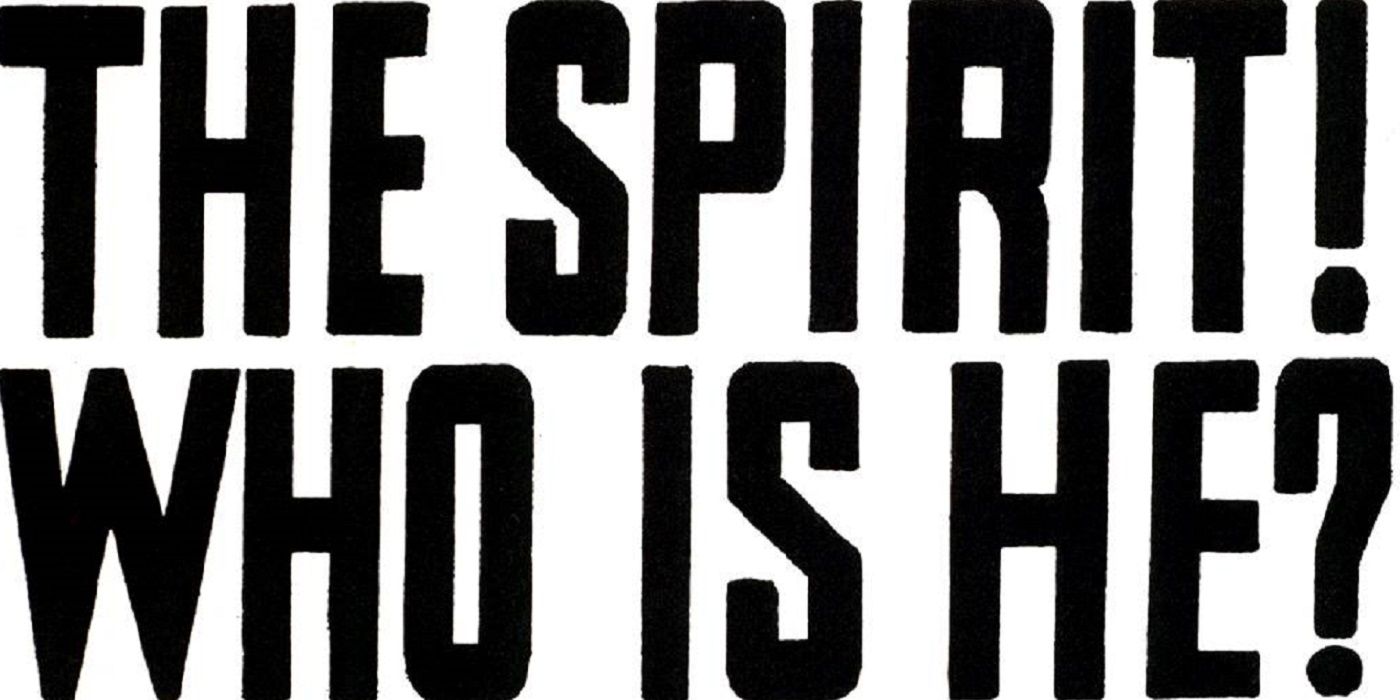
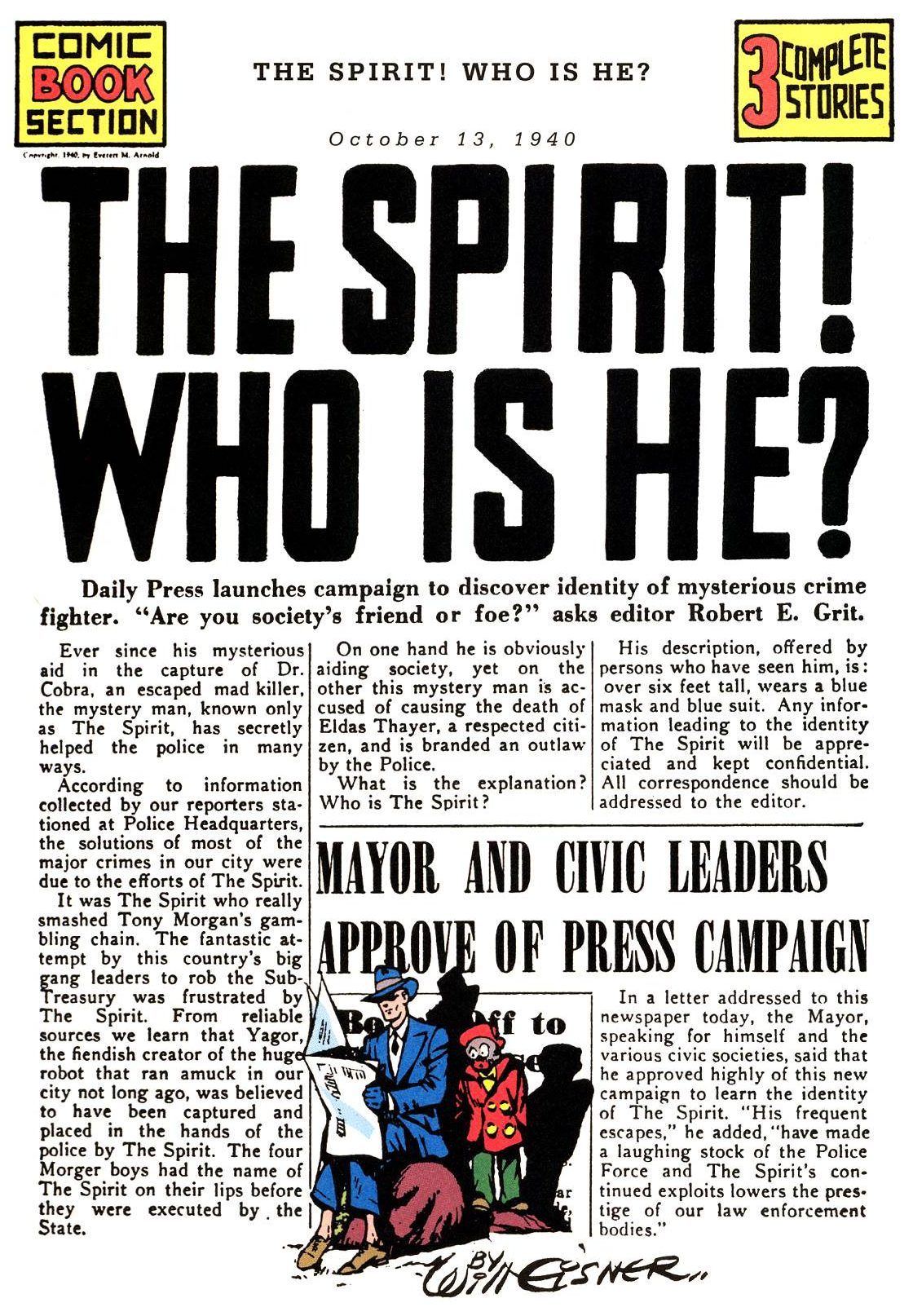
15 THE SPIRIT! WHO IS HE?
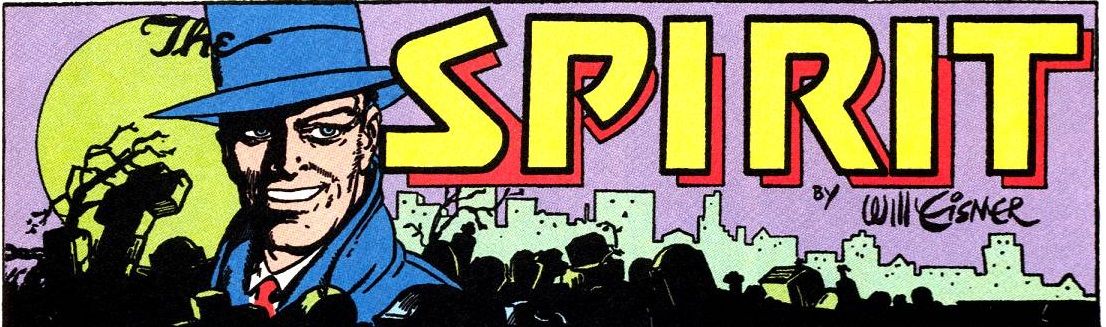
1 of the interesting things about the early days of "The Spirit" is that when the series launched on June ii, 1940, it looked a lot like a standard newspaper "Sunday" comic strip of the era. The titles were just like any other strip. Here's the initial "Spirit" title page...
Every bit the weeks went past, and it became clear that the feature was going to be a success, Eisner began to experiment more with the form. Withal, his initial attempts were more in line with the standard splash page of a superhero comic book of the era. This would mean three-quarters of the page would involve a big effigy and then the bottom right-mitt quarter of the folio would include the showtime panel of the story. Eisner did a number of problems with that format.
His first truthful strikingly-different title page (non counting a close-upwards look at the face of his sidekick, Ebony White, a month before) came in the October 13, 1940 issue, where the entire title page became a newspaper commodity about the Spirit's identity.You see, the concept of "The Spirit" was that he was originally private detective Denny Colt, who was supposedly killed. When he survived the seemingly fatal attack -- since he was effectively a ghost at present -- he adopted the name "The Spirit," with but Police Commissioner James Dolan knowing the truth.
fourteen THE HAUNTED HOUSE
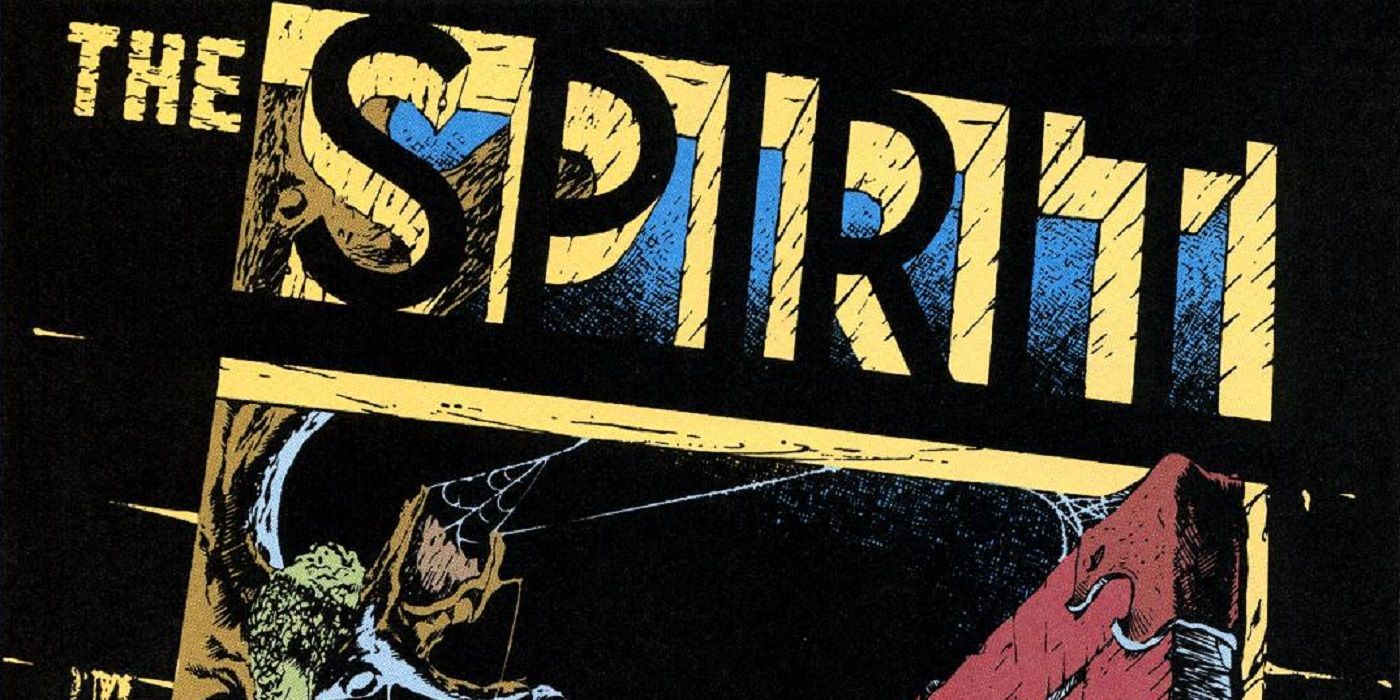
On December 8, 1940, Eisner debuted the outset title folio of "The Spirit" where the proper noun "The Spirit" was worked into the landscape of the drawing, which would soon go the most famous aspect of Eisner'south title pages. The championship had been worked into pages earlier -- similar an early effect with a spotlight centered on the Spirit and his logo -- but that wasn't worked into the actual mural; rather, information technology was only a freestanding logo. It wasn't an endeavour past Eisner to make the logo work every bit part of the environs. That was different with "The Haunted House"...
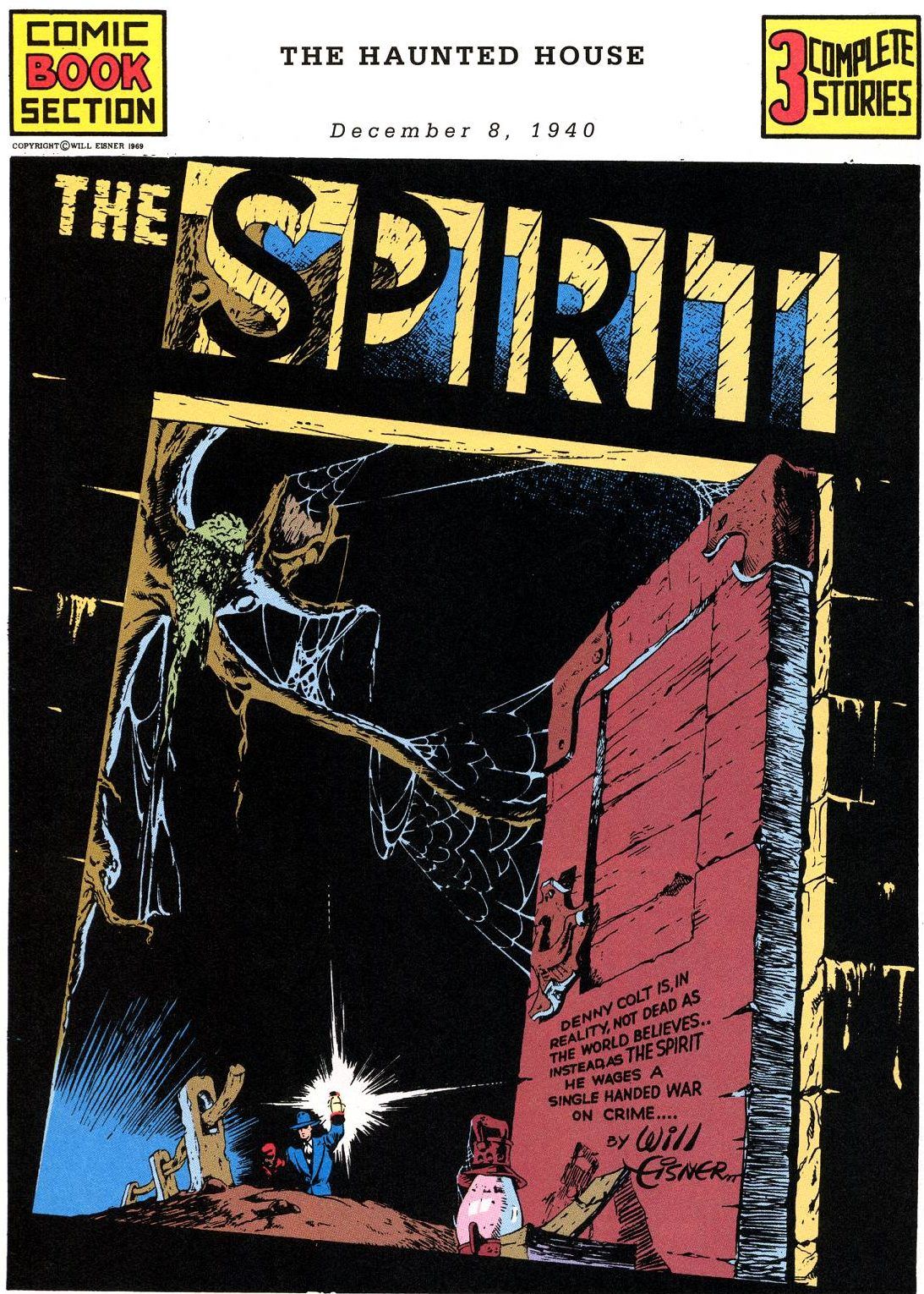
The story featured Spirit and his sidekick, Ebony White, visiting a and then-chosen "haunted business firm" to find the missing will of the previous owner and then that they could preclude the house from falling into the easily of a mobster who had bought up the mortgage on the business firm and was now foreclosing. As it turned out, the owner was not actually dead. He faked his death because he wanted to take intendance of his brother, who had snapped due to mental exhaustion. The possessor was besides embarrassed to let the globe know that his blood brother was now a "simpleton."
thirteen GOLL GIRDER
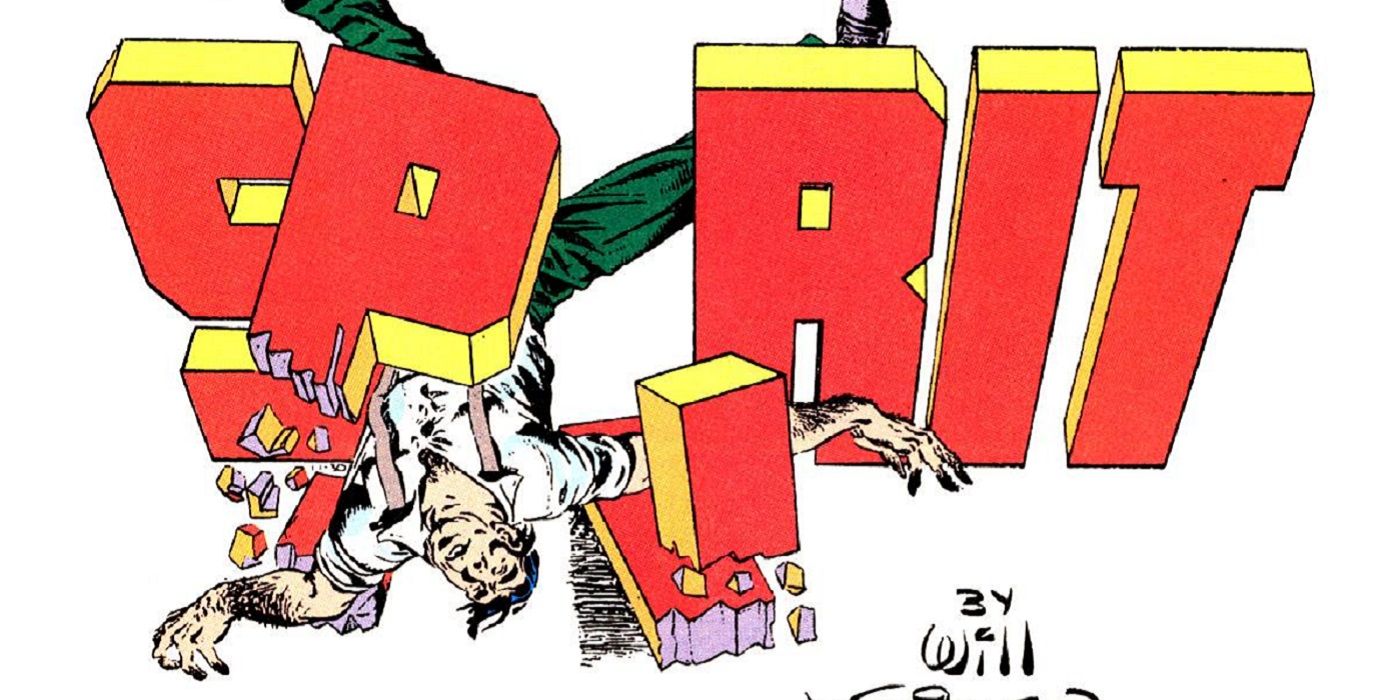
In a lot of ways, Eisner was working on a whole other dimension than other comic book writers of the era, with his attempts to make some of the title pages for "The Spirit" appear to be three-dimensional. This, naturally, was quite a distinctive look for the era. Years later, Eisner did an bodily "Spirit 3-D" comic book (with the amazing Ray Zone doing the color separations to make the volume officially a "3-D" book, consummate with 3-D glasses) and the cover for the volume was the title page to the November 30, 1941 "The Spirit," titled "Goll Girder."
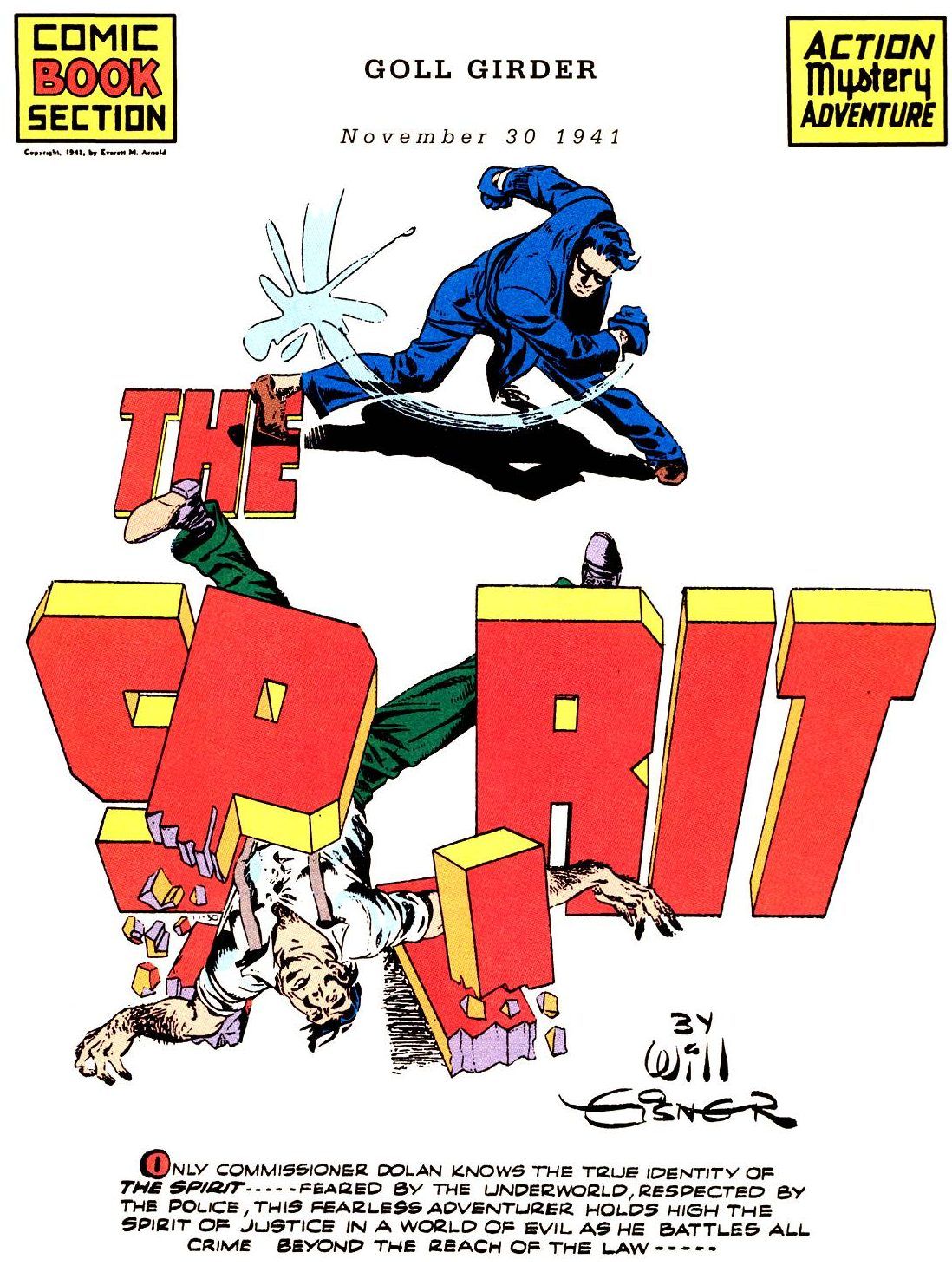
This was an odd petty story that involved the Spirit bursting into a trial just as a teen was about to be sent to jail for robbery. Spirit insisted that the gauge let the male child get and that the Spirit would bring in the existent crook afterwards that day. As it turned out, the boy'due south father, Goll Girder, had murdered the boy's existent begetter before the boy was born and the boy's mother married Girder so that she would have someone to raise her son (and he would keep her from squealing). Spirit beat him and fabricated him confess for his "son'due south" criminal offense.
12 THE Proper name IS POWDER...
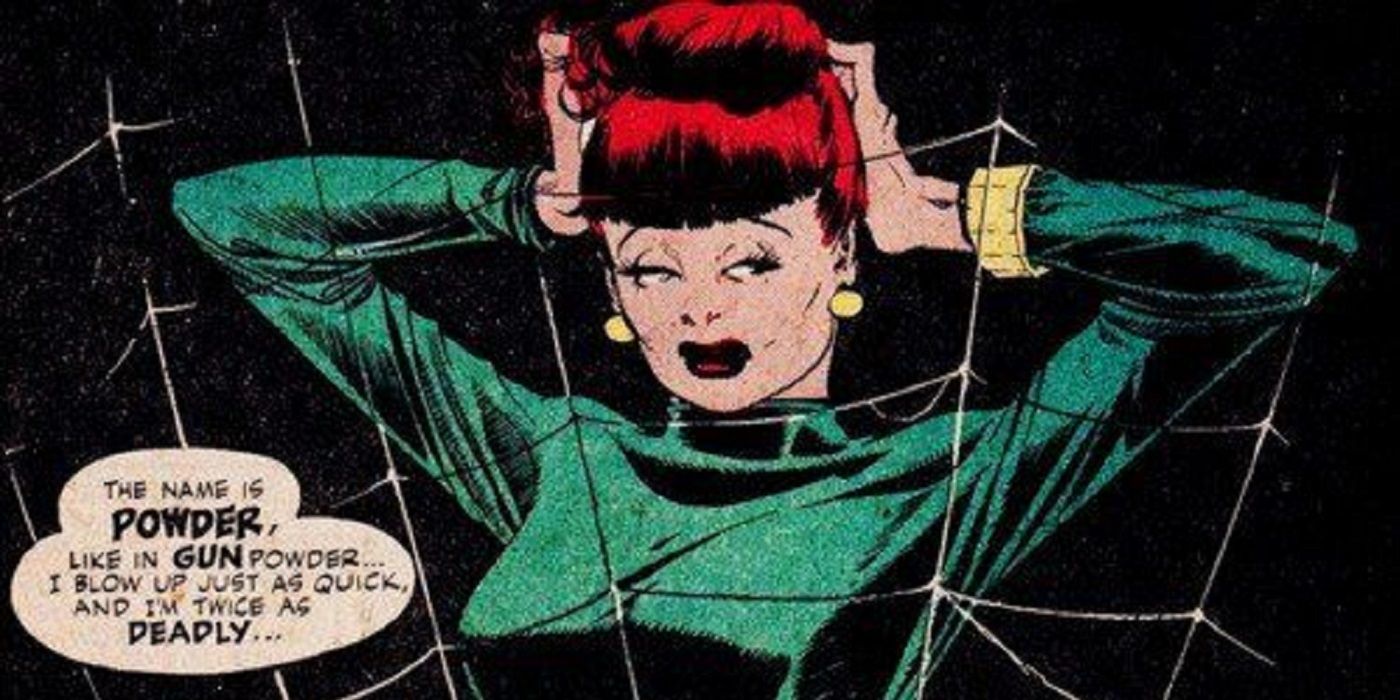
In "The Spirit," Will Eisner tried to keep upwardly with most of the motifs of noir fiction, and ane of the areas where he fabricated certain to excel was with the femme fatales. Ellen Dolan, the girl of the Commissioner, was the Spirit's main honey interest and she was the perfect example of a "good girl." Of form, Eisner fabricated sure to populate the series with a proficient deal of "bad girls," as well. Yous'll see some of the more famous examples of the "Spirit" femme fatales subsequently on, merely for now, nosotros'll spotlight a minor one who stood out for the stunning title page she appeared on in January 4, 1948's "The Name is Powder..."
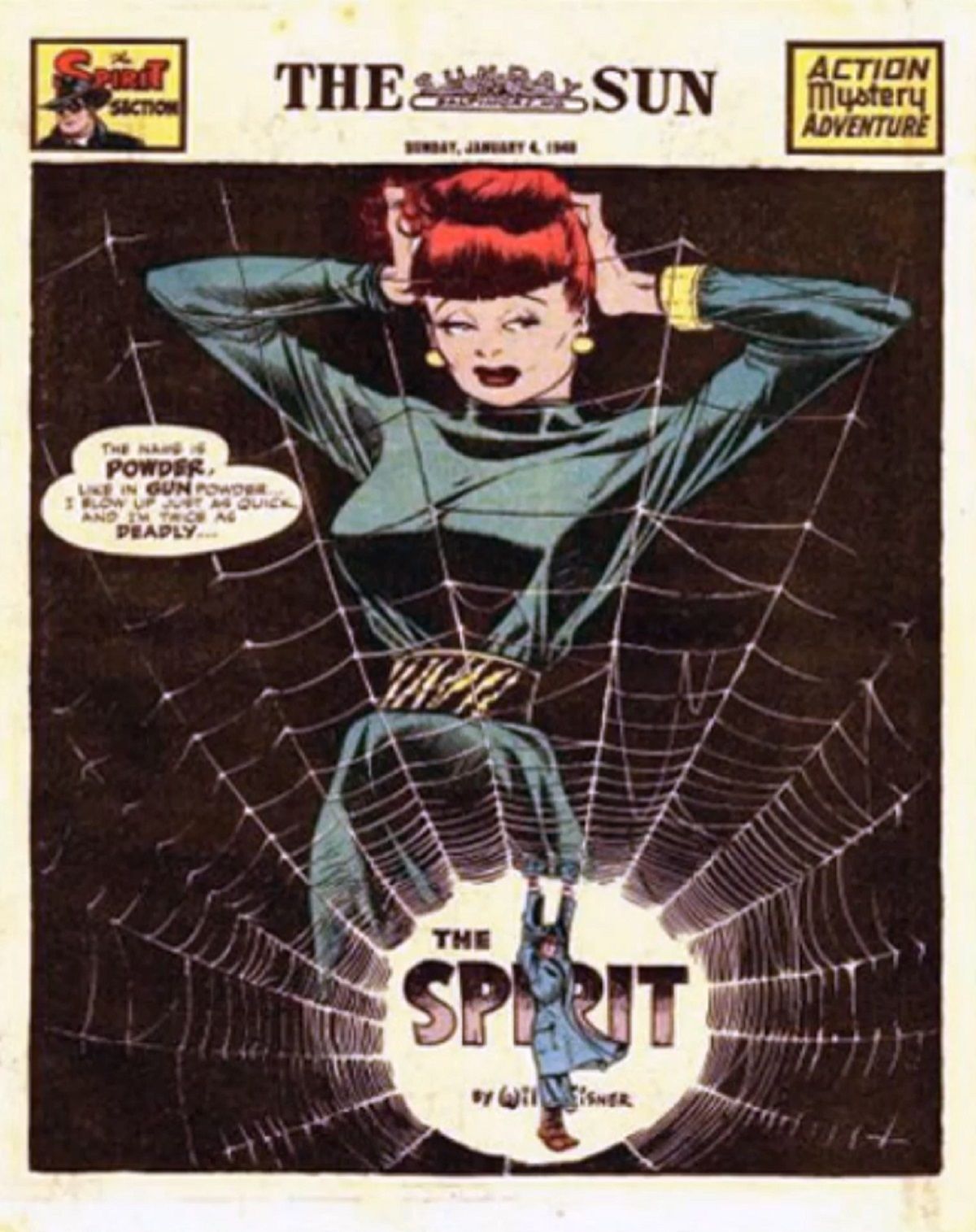
The adult female was named Powder Pouf and she was let out of prison sooner than expected. The cover suggests the idea of the Spirit existence trapped in Powder's web, just in the actual comic, it is instead her erstwhile lover, Bleak, who is sucked dorsum into Powder's earth, even equally he knows that information technology is wrong. In the end, Bleak managed to practice the right thing and Pulverization ends the comic back backside confined.
11 HANGLY HOLLYER MANSION
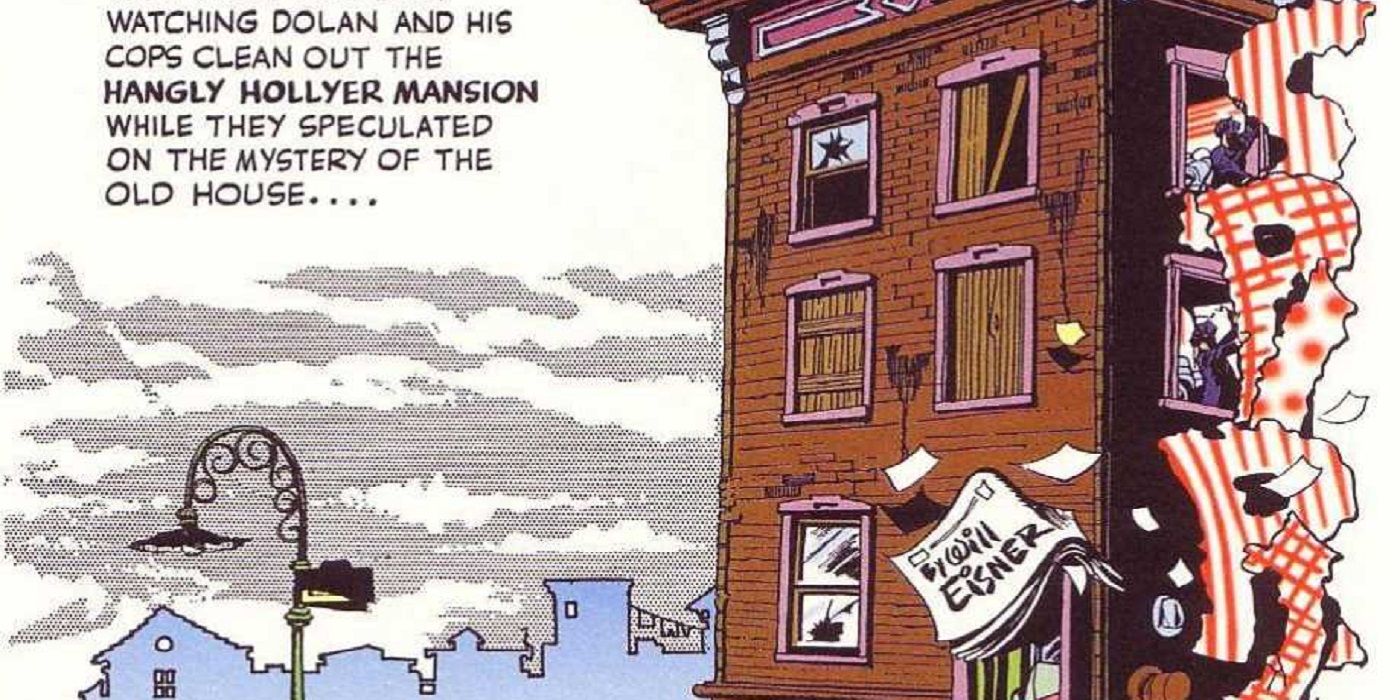
In this striking title image from June 22, 1947, we see an old mansion being torn autonomously, with the debris forming the Spirit's name in a clever way. The specific story in this outcome is a chip of a silly tale of two brothers, one who won't marry a certain woman so long as his brother is alive, then she then tries to impale the brother until he finally dies of other causes years later. At that point, the other brother won't marry her because before he died, his brother revealed how she had been trying to kill him for years! He then kills her and her ghost visits Ebony White.
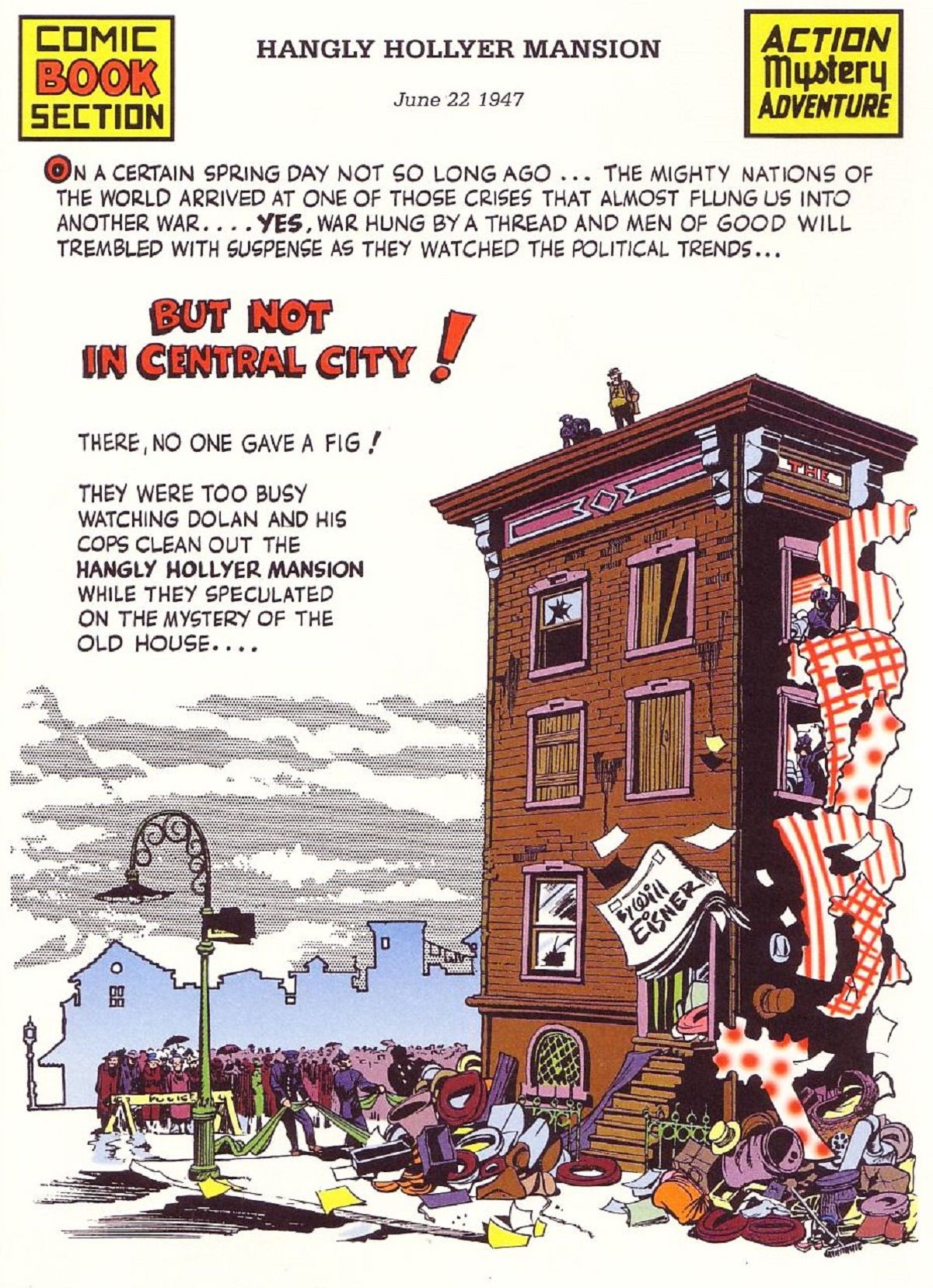
However, the story takes on greater meaning when seen as an early example of a story that Eisner would later tell in his classic graphic novels, starting time with "A Contract With God," although those stories were more about tenement life; specifically tenement life of Jewish immigrants. Notwithstanding, the same basic accent on the building that they lived in was present in this earlier work. Much like Chris Ware'south later "Building Stories," Eisner was fascinated with the history contained within buildings.
10 LIFE BELOW
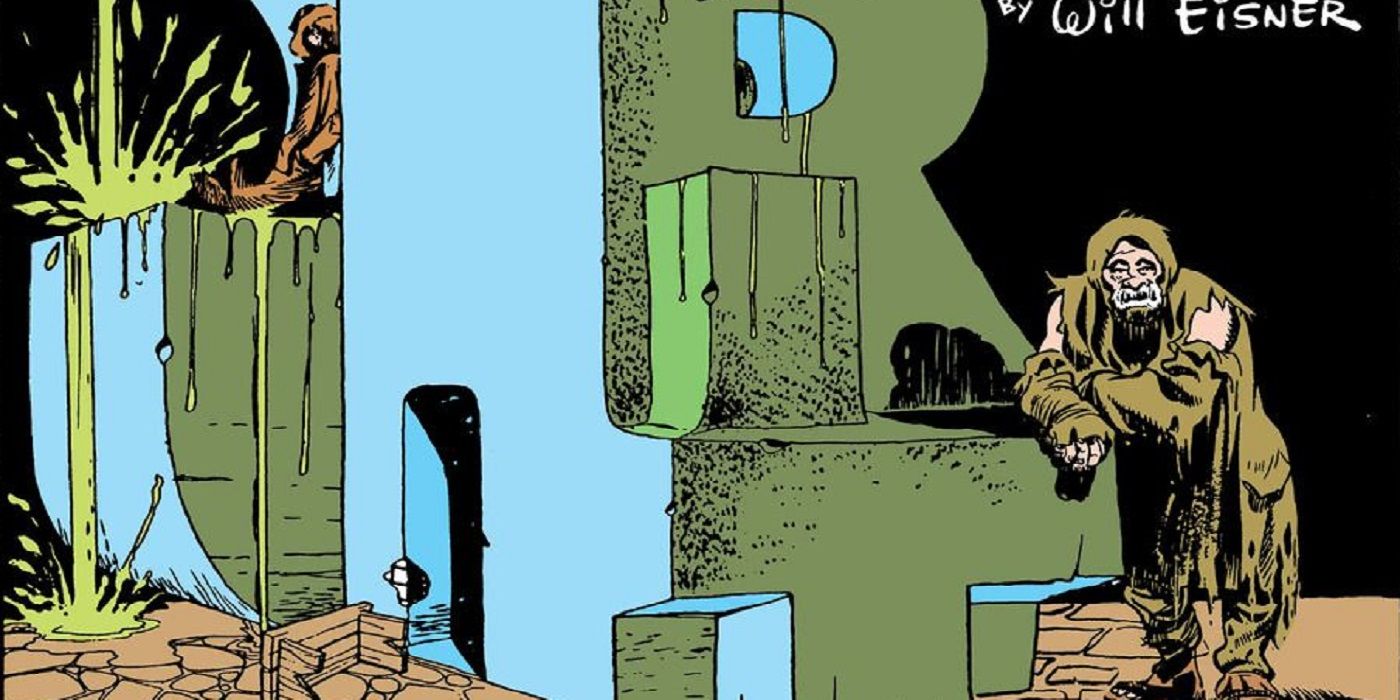
Due to the fact that he is a "ghost," the Spirit very frequently traveled via sewers. This allowed Eisner to practise a whole lot of interesting title pages that worked sewer grates into the design of the comprehend, including a number of smashing examples where the grates form the name "Spirit." However, while they were mostly just used as a way to get where the Spirit needed to go, Eisner would, on occasion, also expect to the homeless people who lived in the sewers of Central city.
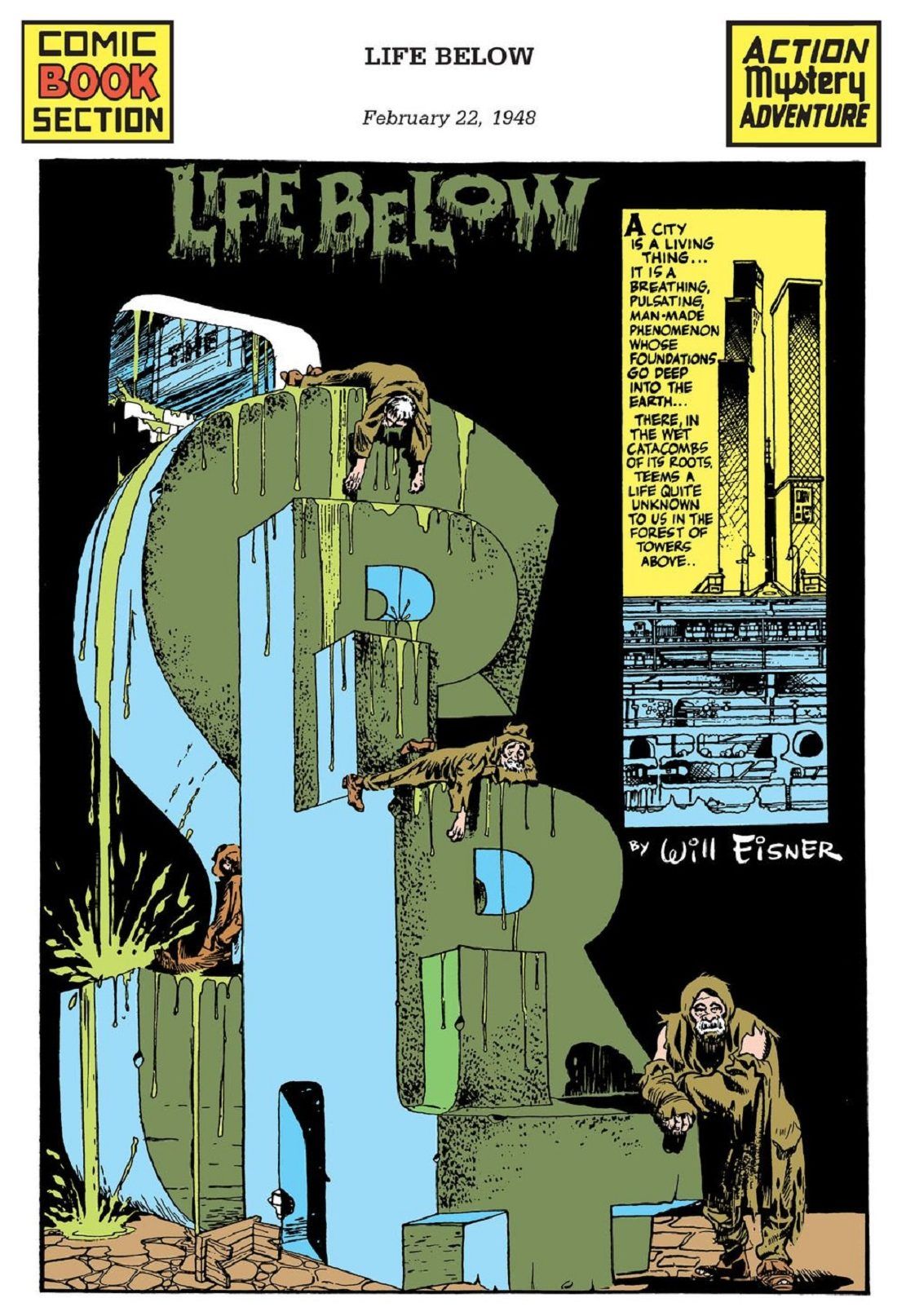
That's exactly what he did in "Life Beneath," where we come across the people through a striking use of the championship of the book mixed into the architecture of the sewers. 1 thing that was often apparent in Eisner's piece of work, and much more and then when he began doing his independent graphic novel work, was that he really knew how to bring out the humanity inside his subjects.
9 ALLIGATOR FARM
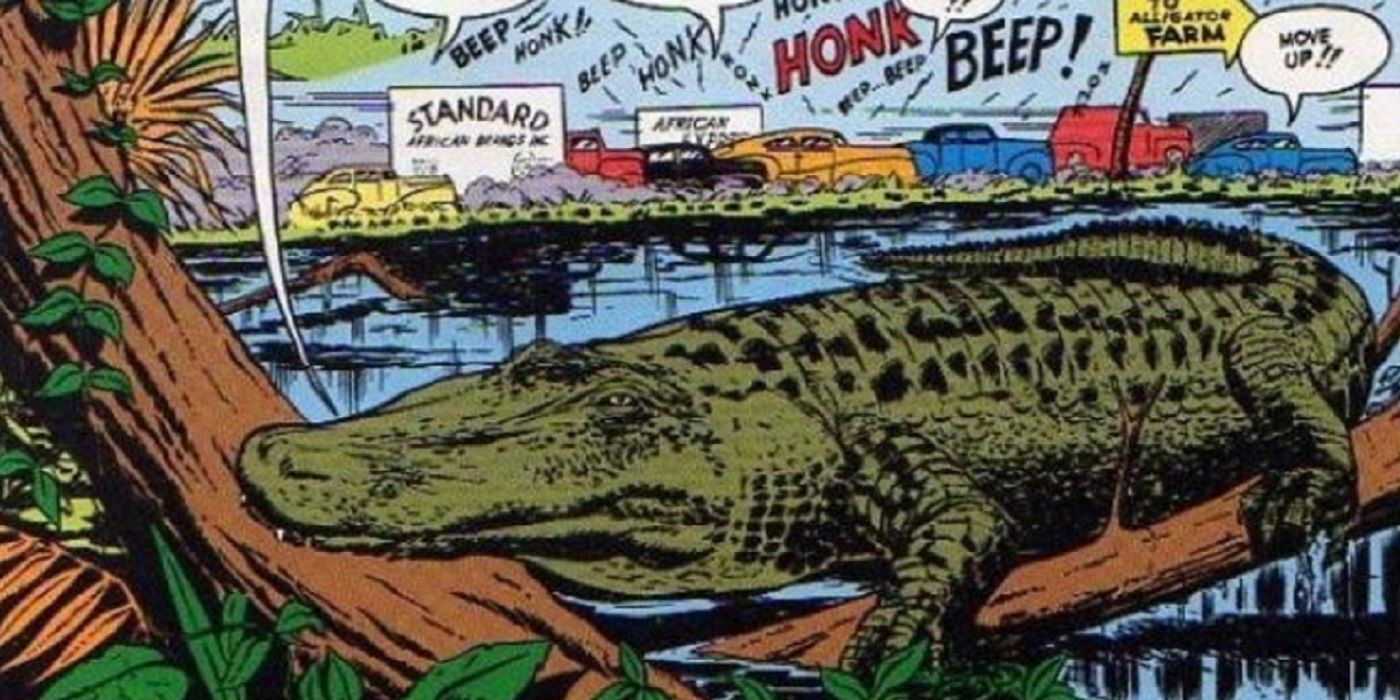
As noted earlier, Key City in "The Spirit" was, like Gotham City, practically a graphic symbol in its own right. Eisner believed in the notion of the urban center as near a living being, which was reflected in his "Spirit" stories. Therefore, information technology was ever quite a daze when the stories took identify outside Fundamental City. When they did, the title pages stood out even more than than normal, like this stunning "Alligator Farm" splash, explicitly contrasting the abode of the alligator against the hustle and bustle of the city.
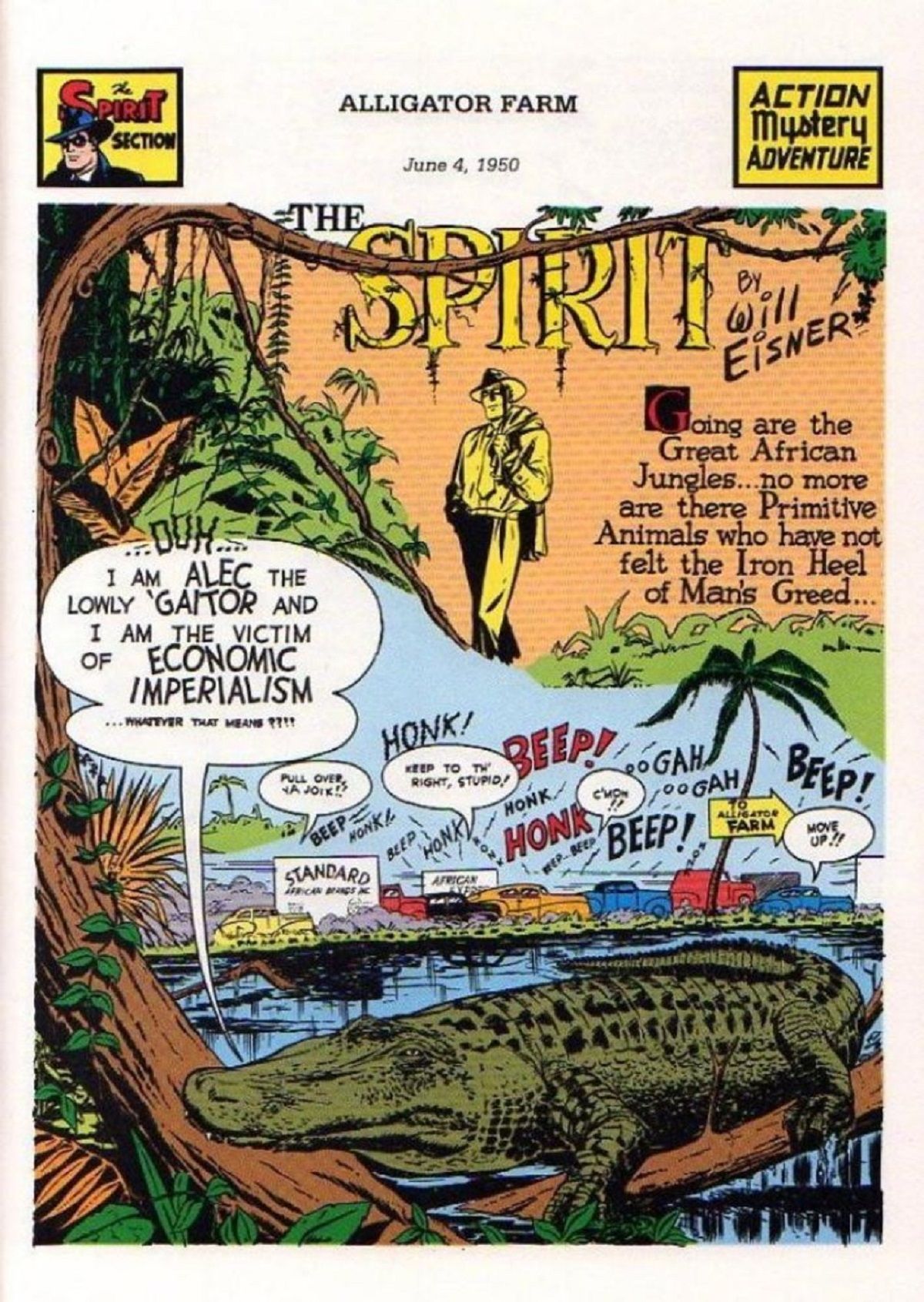
The story is set in East Africa, where a pair of crooks bought an alligator farm to lay low after robbing a bank in Arab republic of egypt. I of their neighbors was a crook who had the same thought. Their neighbour, though, ended upwards swindling them and forcing them to open their alligator farm to the public. In came a new farmhand, who was secretly the Spirit, who ended upwardly having to wrestle an alligator! Amusingly, the whole story is narrated by the alligator.
8 INVESTIGATION
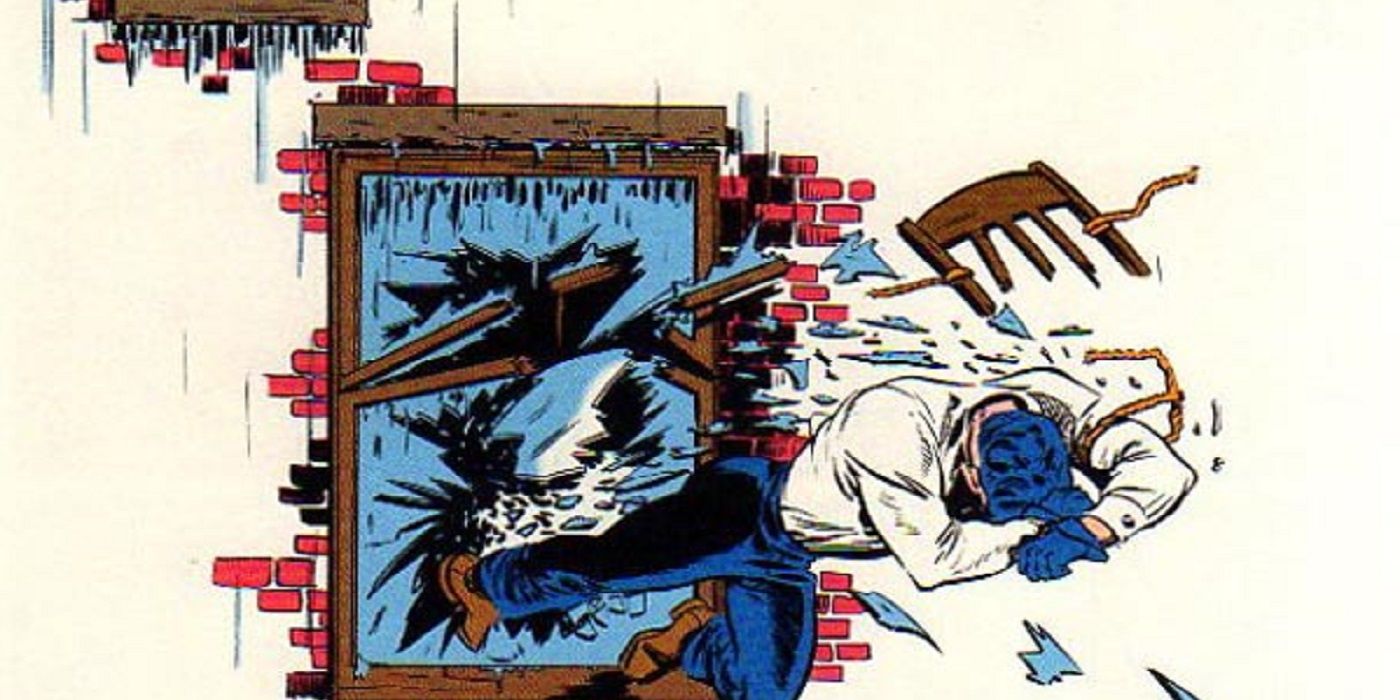
Not merely was Will Eisner a legendary comic book creative person, but he was 1 of the all-time peachy comic volume art theorists. He was a brilliant lecturer on comic volume fine art and he had many fascinating views on how to connect with readers (Dark Horse put out an excellent book containing Eisner and Frank Miller discussing comic books that is a must-read for comic volume fans who wish to acquire a little scrap about Eisner's views). Regarding splash pages, Eisner once noted, "The large thing for me in any splash page is to secure control over the reader. You set the mood and form your contact with the reader at that point." He followed that the reader has to make up their mind on whether they're interested in a story instantaneously and thus, "I'm concentrating everything on capturing the reader'southward imagination, on capturing his or her mood."
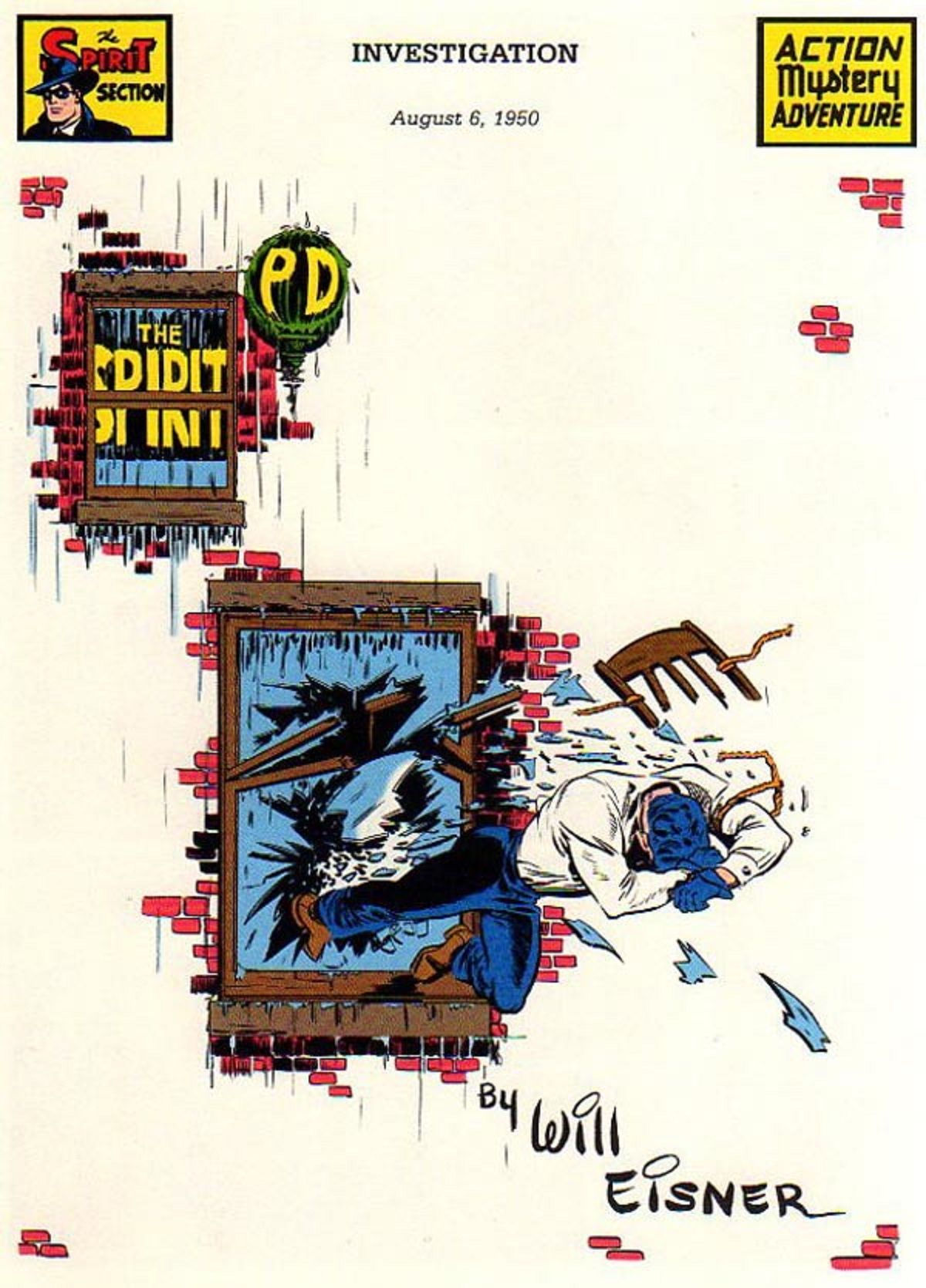
With that in heed, this splash for "Investigation" is one of the all-time examples at something that a reader couldn't help just pay attention to, as the figures are practically flying off of the page into the reader'southward lap. The actual story for this one was pretty basic (Spirit immigration Dolan on simulated abuse charges), but what a title page! Attention and imagination successfully secured.
7 Black Alley
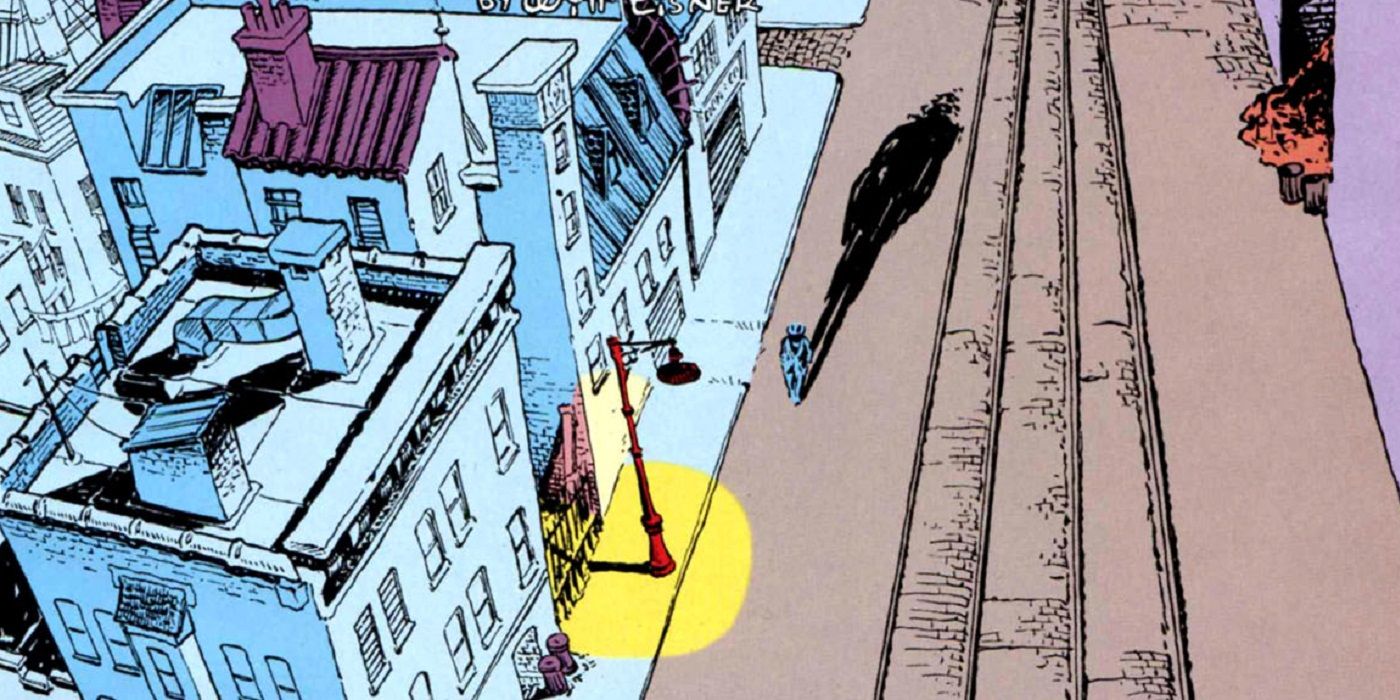
I of the all-time neat "Spirit" stories, "Blackness Alley," takes place over a dark nighttime in Central Urban center in one of the darkest parts of boondocks, as the Spirit is set to be assassinated by an operative for the "Big Vi." When it comes down to it, though, the bad guys are surprised by how many good guys are subconscious in the shadows, too.
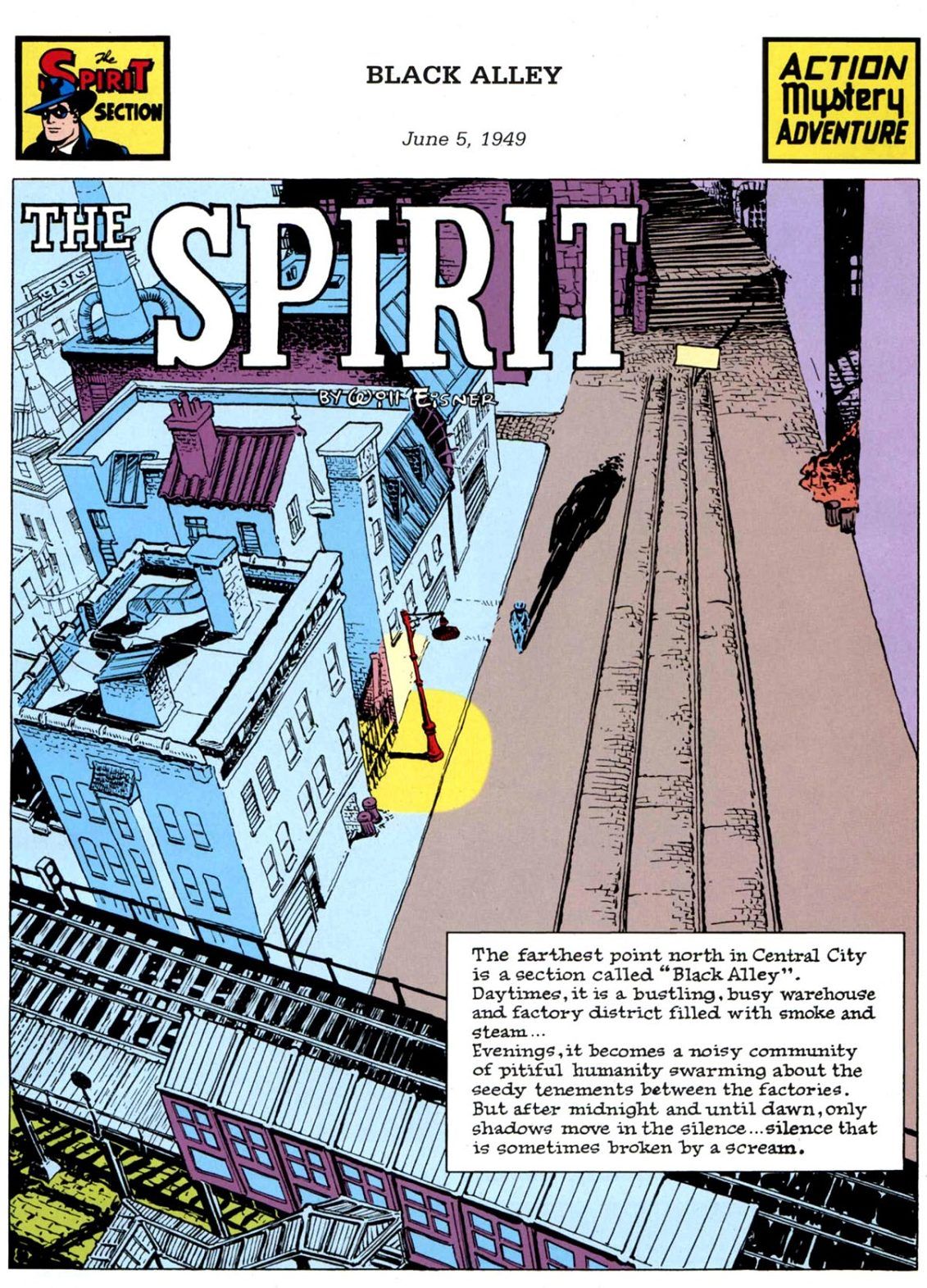
This particular book is famous for its heavy use of shadows and silhouettes to tell the story. The title page is notable for how Eisner pulled dorsum on some of the over-the-top design elements that he oft used in his championship pages. While those are typically quite excellent, it nevertheless goes to testify that sometimes less can be more than, peculiarly when delivered in dissimilarity to the other, more mutual type of title pages. On top of that, the intricate item Eisner puts into the urban center landscape is stunning. It'due south such a beautiful piece.
6 THE Elevator
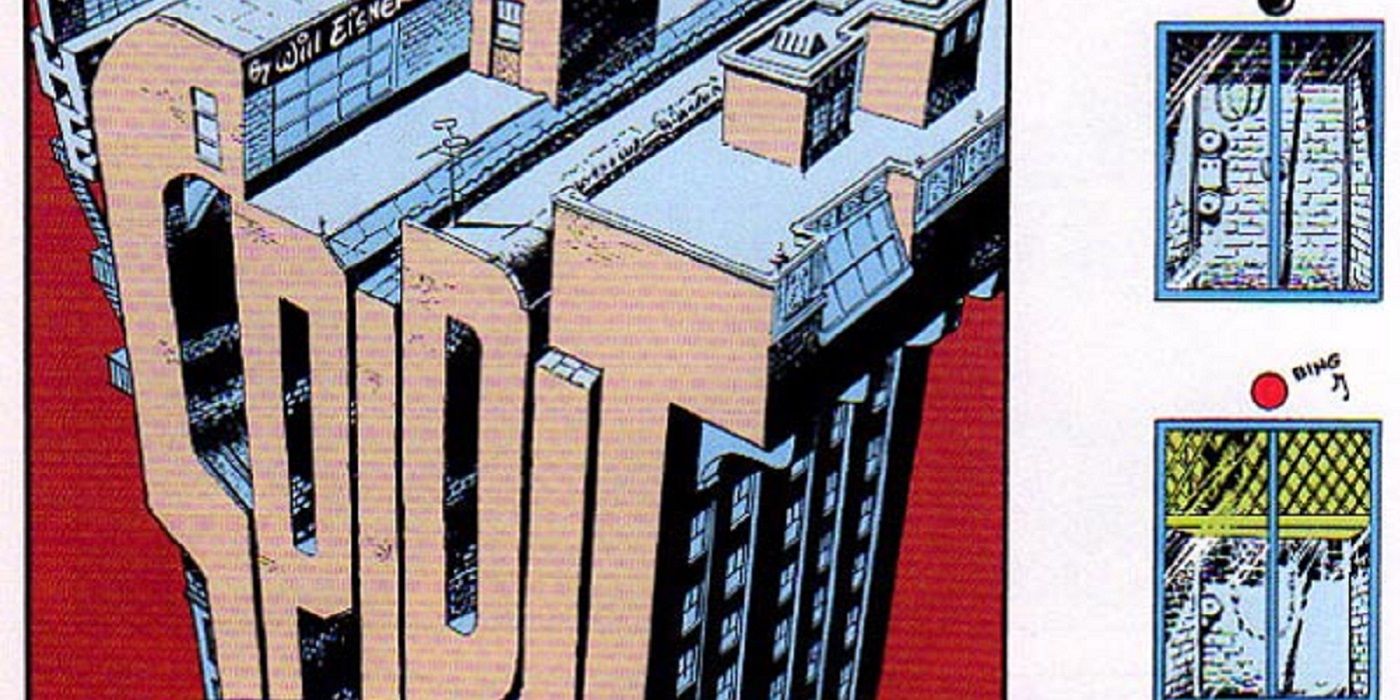
Every bit noted earlier, Will Eisner had e'er had a fascination with buildings and their stories (no pun intended... nosotros call up). Never did he practice quite every bit good of a task every bit visually displaying that interest than with the splash page for "The Elevator."
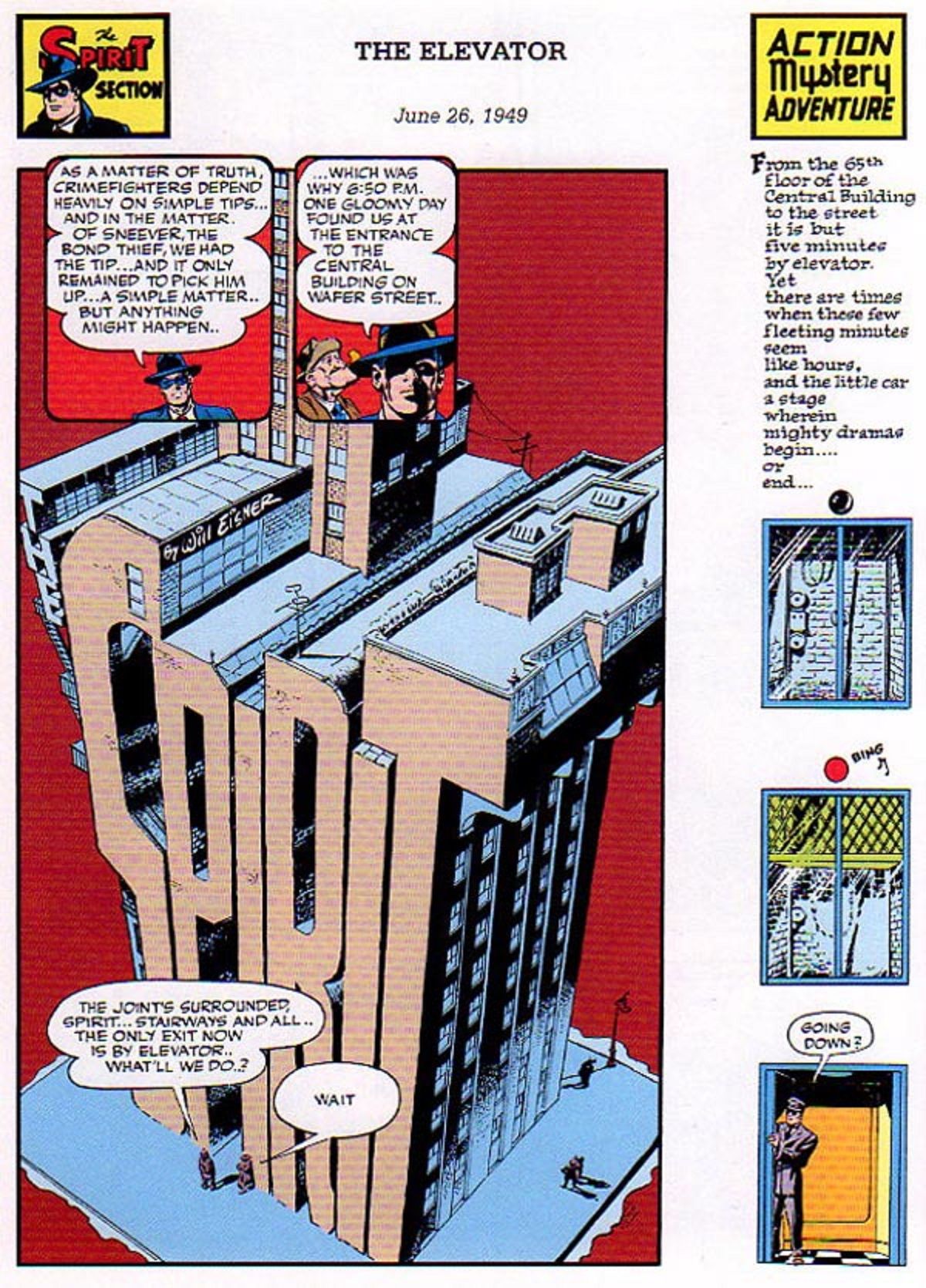
This is i of the rare "Spirit" stories where the 2nd folio is almost every bit striking of a design every bit the offset folio. While the first page establishes the edifice and the fact that an elevator is in play, the second folio splits the panels into floors of the building and shows characters boarding the lift at dissimilar floors.
Ebony ends up stuck on an lift with a bunch of crooks, who were each hoping to simply become off the elevator with their sick-gotten gains. However, when the elevator got stuck, they all quickly turn on each other. Of course, Ebony is not worried since he knows that the elevator operator is the Spirit in disguise. Except, well, he's not actually the Spirit in disguise. Who knew an elevator could contain such twists and turns!
5 PAPER Hunt
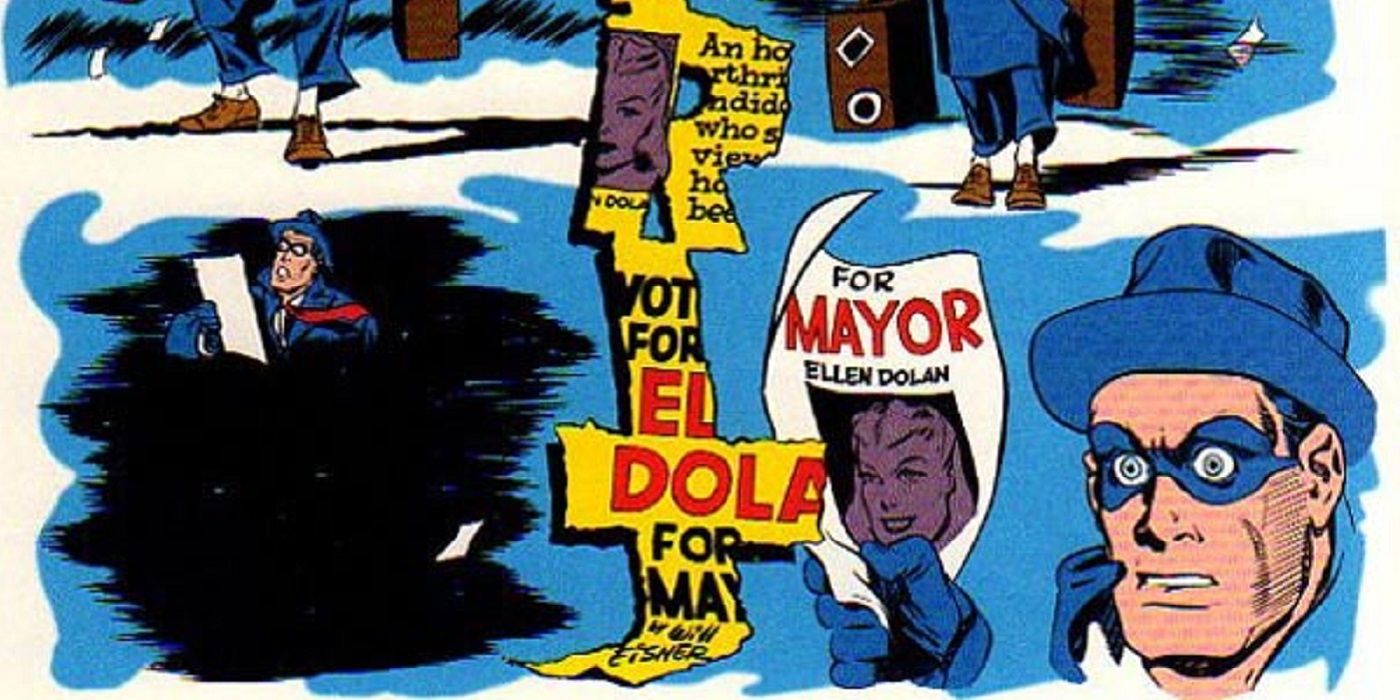
When Eisner completely pulled out of the series at the very end, Jules Feiffer, who had already been handling the writing duties for some time, paired with the legendary Wallace Wood to tell "Spirit" stories involving much more science fiction themes than ever before. It was akin to when Dick Tracy got involved in outer infinite stories. Before that happened, though, and towards the end of the "normal" run of "The Spirit," Eisner felt that the grounded Ellen Dolan deserved more than character development. Then, he had her run for (and win) the position of Mayor.
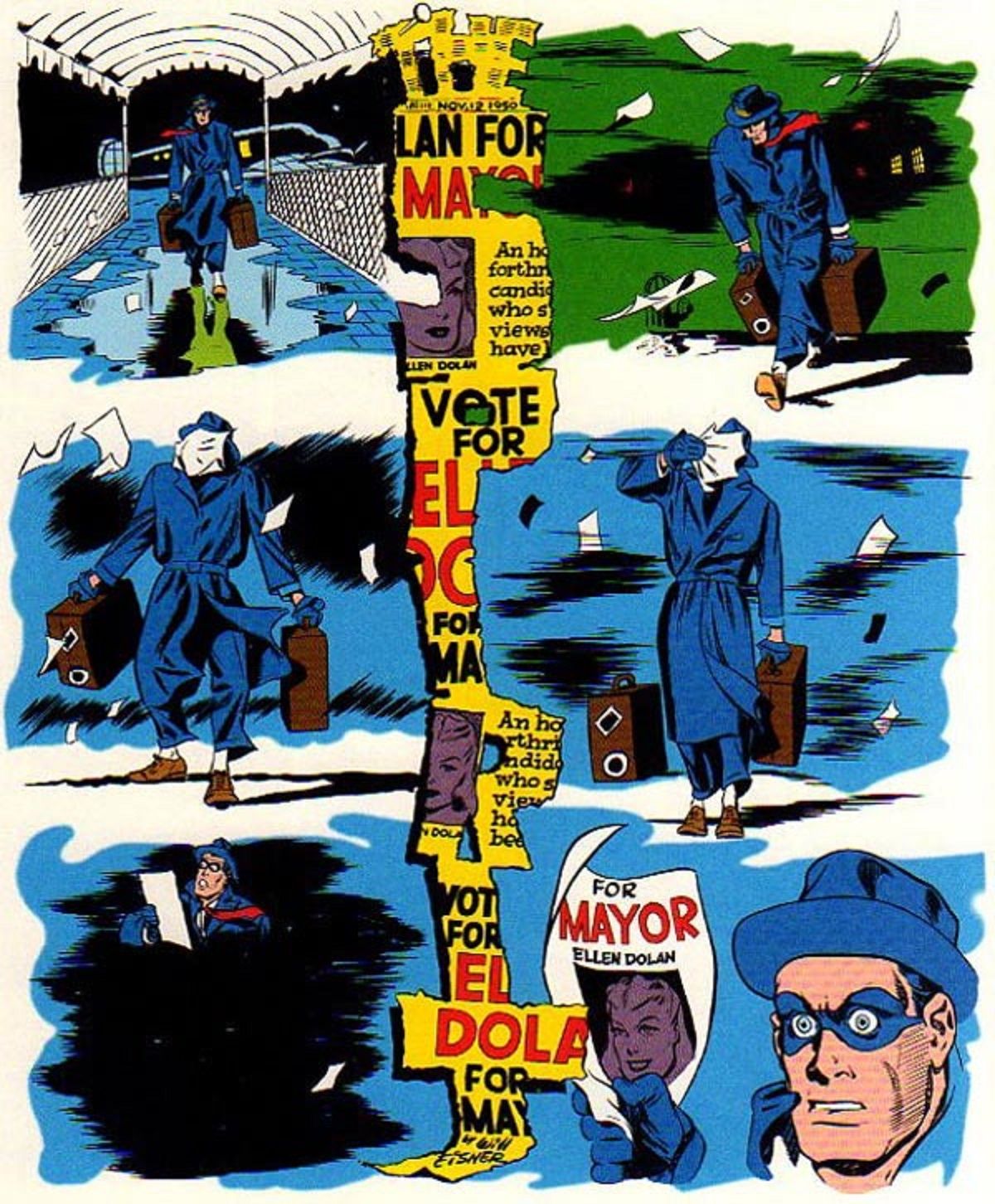
The splash page for "Paper Chase" was one of the ones Eisner was about proud of, later recalling, "I call up being very pleased with the way this splash page came off, and looking at it again almost twoscore years afterward, I think it holds up well. This was my kind of splash page, where it gives a real sense of motion while functioning as a sort of prologue, all without any dialogue. Information technology'southward similar a pantomime. And I was ever addicted of working the logo in like this too. A page like this brings the reader quickly into the story."
iv Run into P'GELL
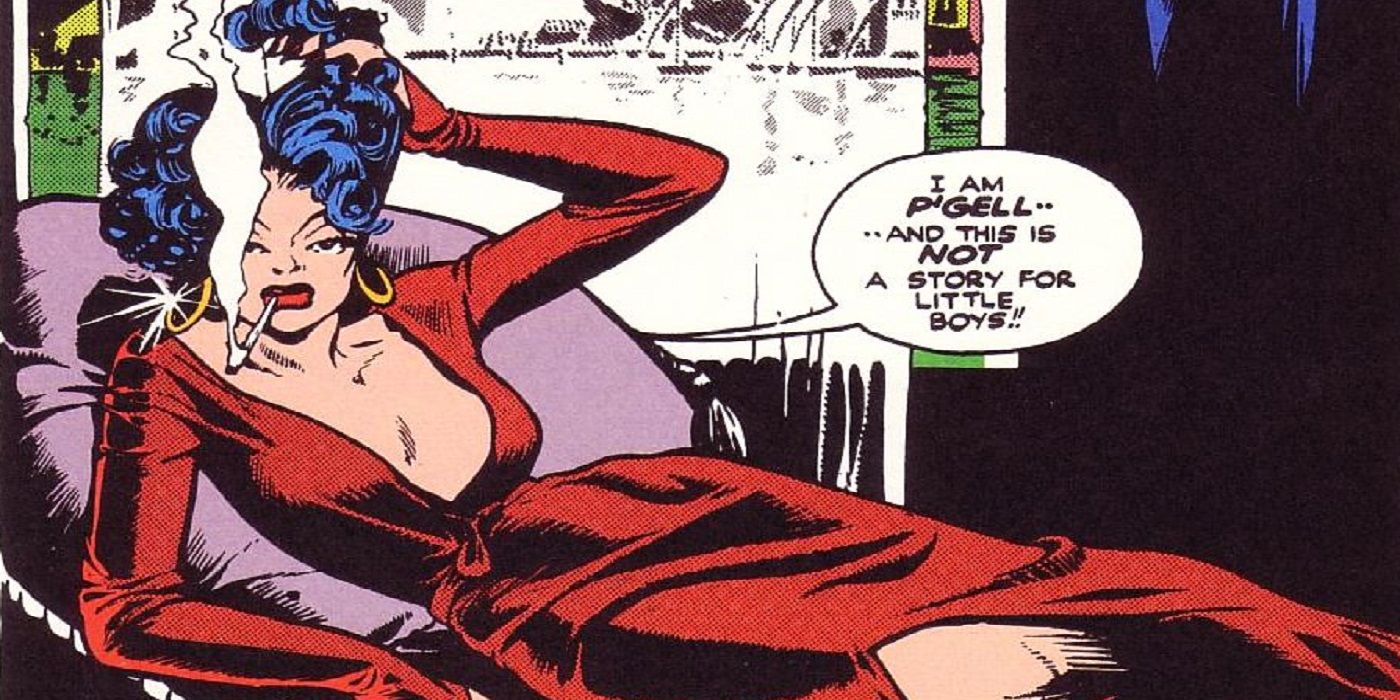
As we mentioned earlier, "The Spirit" is well known for having a number of femme fatales involved in the life of Denny Colt, and few of them were ever quite as fatal as P'Gell. We met this sultry lady in 1946'southward aptly title, "Encounter P'Gell," with i of the near audacious championship page splashes that you could imagine. Will Eisner certainly knew how to depict a seductive graphic symbol.
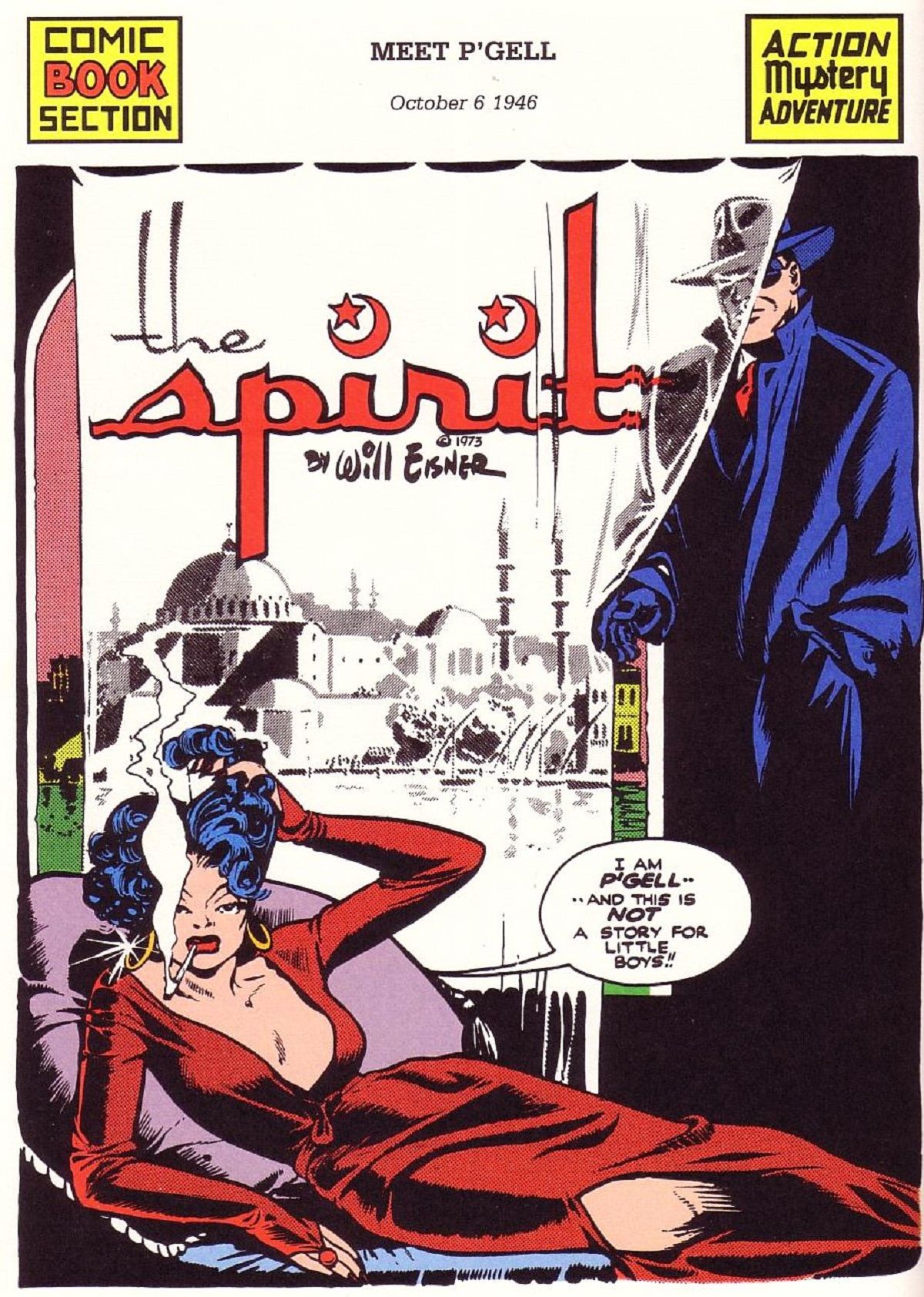
In the story within -- which was also one of the rare "Spirit" stories to see our hero travel overseas -- we encounter P'Gell'due south unique mode with men, as she manipulates her married man and so that she can escape to America, arranges his murder when she learns she won't be going there after all, and finds a way to keep afloat after information technology all goes wrong. At that place's an first-class sequence where P'Gell breaks the quaternary wall to assure readers that, don't worry, every bit bad equally her predicament looked, she ended up okay... and with a new hubby, to kicking!
3 THE STORY OF GERHARD SHNOBBLE
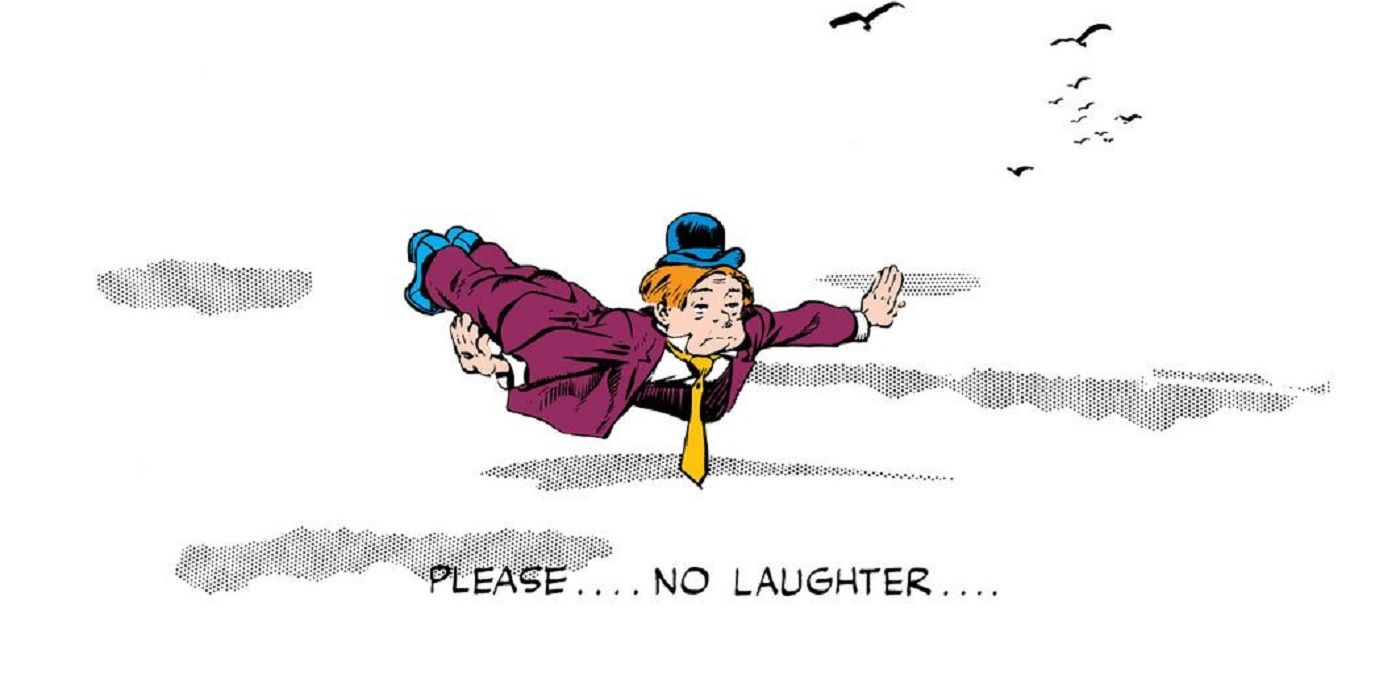
1948 was a special twelvemonth for Will Eisner. He was back from the war, things were running smoothly and he was able to dedicate himself to "The Spirit" fully for the first time in a number of years. At the same time, in September of that year, he discovered a new side to himself, a side that would play a significant role in Eisner's career from that indicate forrad. The title page splash of "The Story of Gerhard Shnobble" is quite unusual, and it is particularly interesting for that stop notice, nigh how we are not to laugh at this situation.
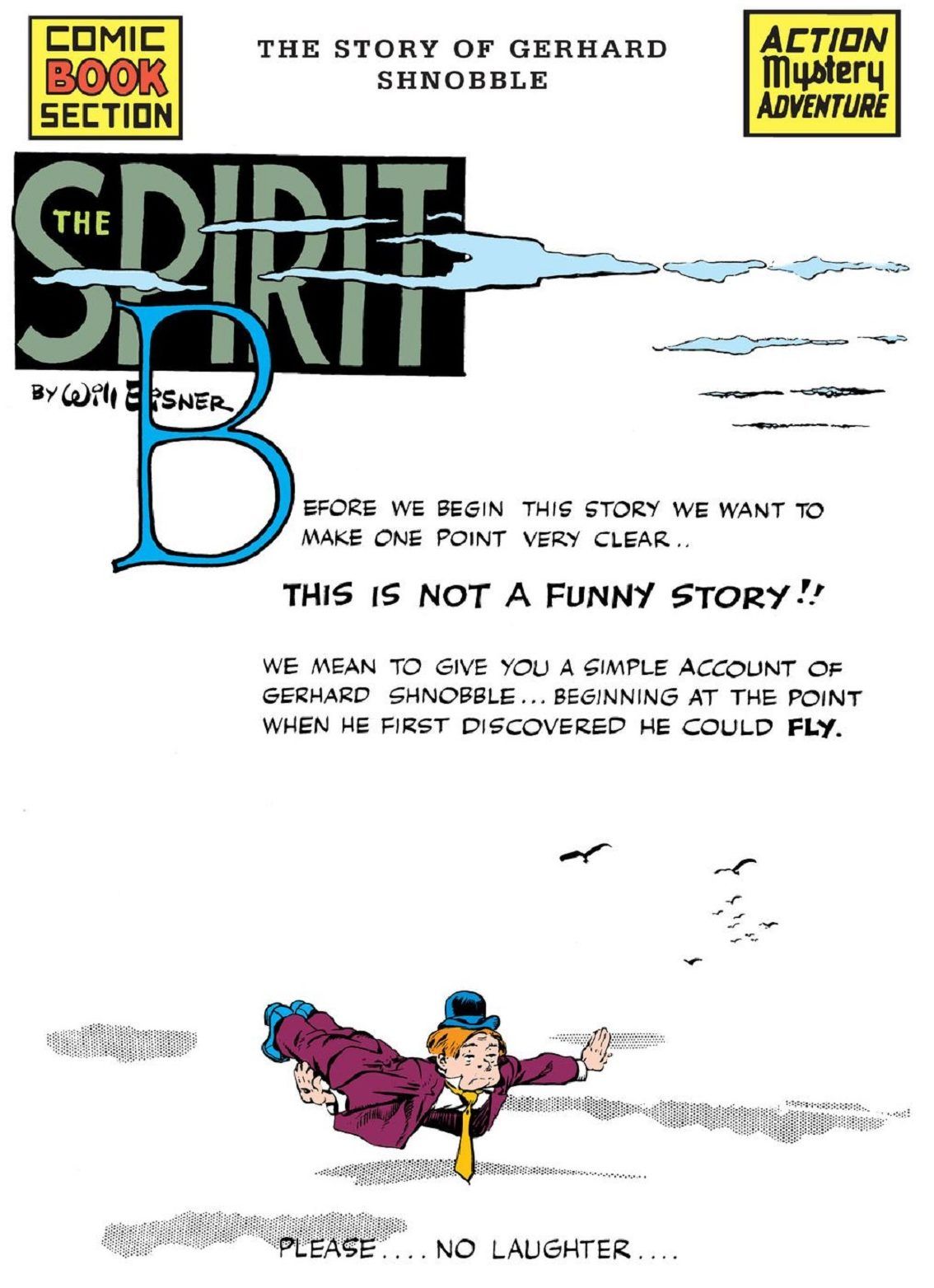
The reason why the story is not "funny," is that Gerhard Schnobble, after years of being ignored, decides that he will leap off a building and fly. Not only that, simply guess what? That's exactly what he did! It was amazing... until he was and so shot and killed past an errant shot in a fight between the Spirit and some bad guys. Schnobble died before anyone could see him wing. This story was perchance Eisner's favorite "Spirit" story of all-time, but more than chiefly, as he recalled in 1987, "Information technology was the beginning time that I was truly aware that I could do a story that I had great personal feelings about."
ii BRING IN SAND SEREF
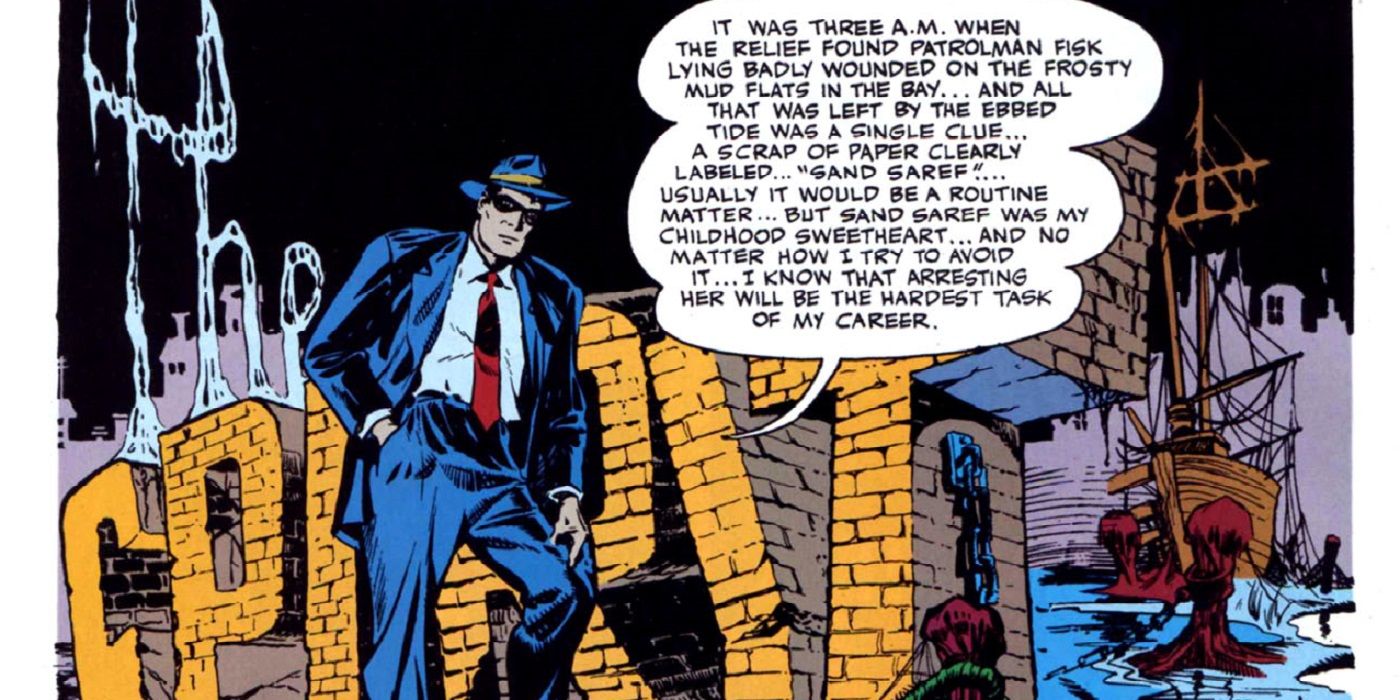
Mayhap the well-nigh famous of the Spirit's femme fatales was Sand Seref, who was later the inspiration for Frank Miller's cosmos of Elektra. Similar Elektra and Daredevil, Sand and Spirit knew each other in the past, simply were and then swept into different sides of the law due to tragedy. In the previous story (which besides has a great, if a bit more subdued, title page, one that Matt Wagner noted was a particular favorite of his back in 2015), nosotros learned of their by and now, in this second i, the Spirit has to bring her in.
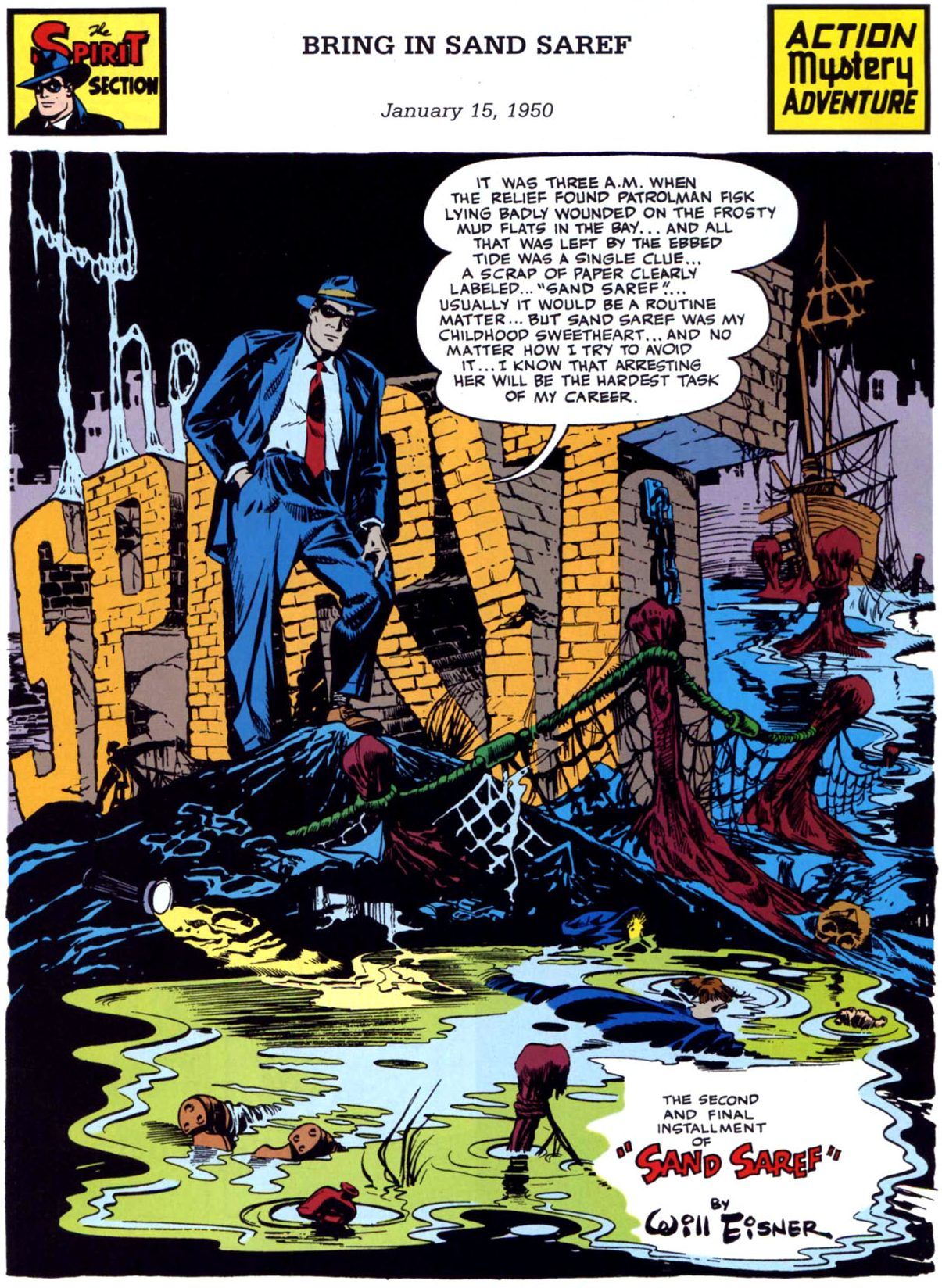
There is so much going on in this championship page; after all, at that place is a good reason it is regarded as i of the very best "Spirit" splashes of all-time. The most interesting matter about it, though, is that this was originally a splash for a whole other character! Will Eisner had tried out a new comic hero named John Law, and this splash (and Sand Seref menses) were originally part of a John Law story that Eisner just edited into a "Spirit" tale.
i SLIPPERY EALL
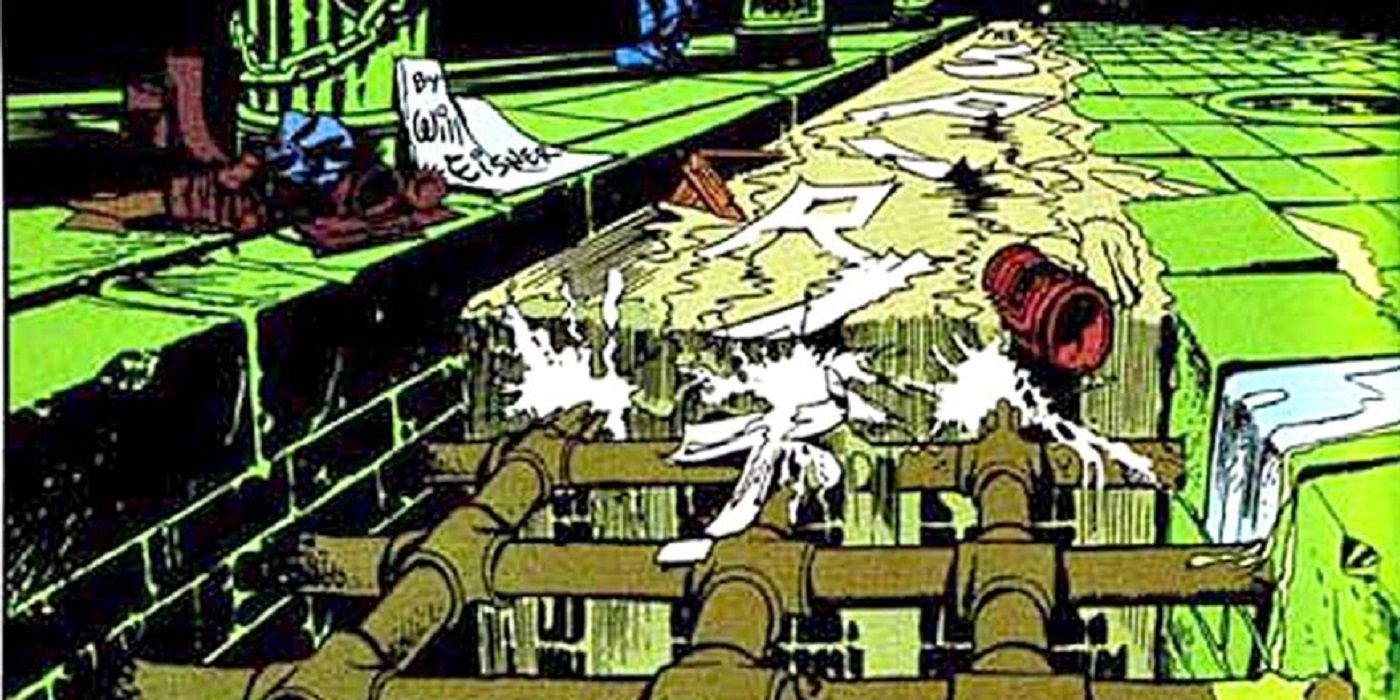
One of the all-fourth dimension great noir films was Carol Reed'southward "The Third Homo," starring both of the leads of the classic "Citizen Kane," Joseph Cotten and Orson Welles. The end of the motion-picture show takes place in the sewers of Austria and there's a stunning sequence involving a sewer grate. Volition Eisner'due south "Spirit" is so striking that with the title page splash to "Slippery Eall," he managed to match the power of Reed'southward sewer scene with this 1, as nosotros run across newspapers float into a sewer grate (with the papers forming the name, "Spirit") while the papers at the top requite a powerful testimony about crime.
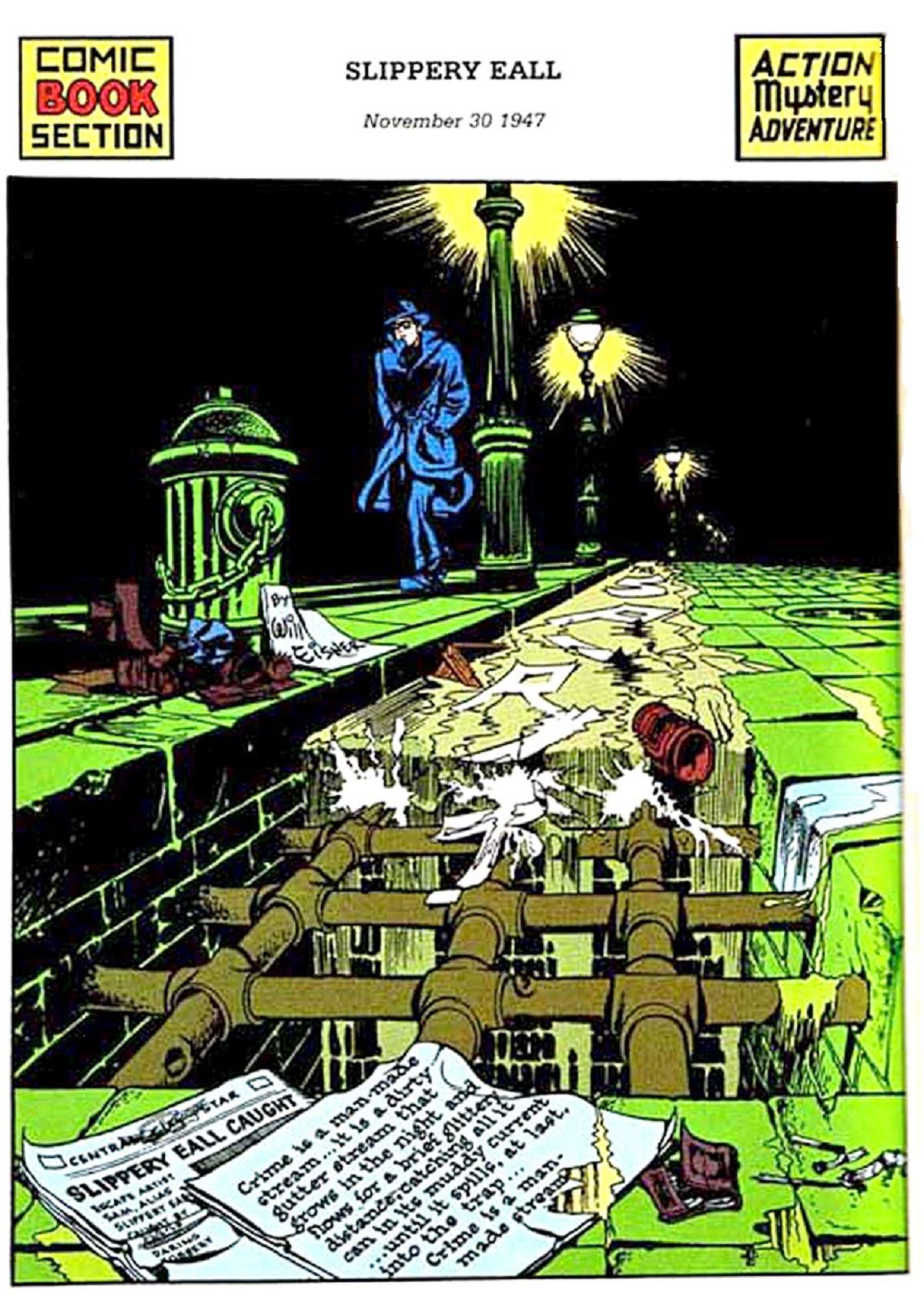
What's interesting is that the title folio splash is followed by another hit page of a prison break out. Interestingly, the story itself concluded up being more comedic than anything, as the three prisoners (including Glace Eall) are all based on Will Eisner and his banana Jerry Grandenetti and the letterer of the characteristic, Abe Kanegson!
What's your favorite "Spirit" title folio? Let us know in the comments department!
About The Writer

Source: https://www.cbr.com/will-eisner-the-all-time-greatest-title-pages-from-the-spirit/
0 Response to "Will Eisner the Spirit Will Eisner the Spirit Art 1979"
Post a Comment